HDB flats · Singapore
HDB Electrician Singapore
Around eight in ten Singapore homes are HDB flats, and a flat has its own set of rules on top of the national ones: HDB permits, conduit requirements, and an electrical loading limit that quietly decides what can be added. This page gives you the checks you can run yourself before anyone quotes you, and lets you request a licensed electrician.
- Check the licence on ELISE
- HDB permit and loading rules
- Ask for a written quote first
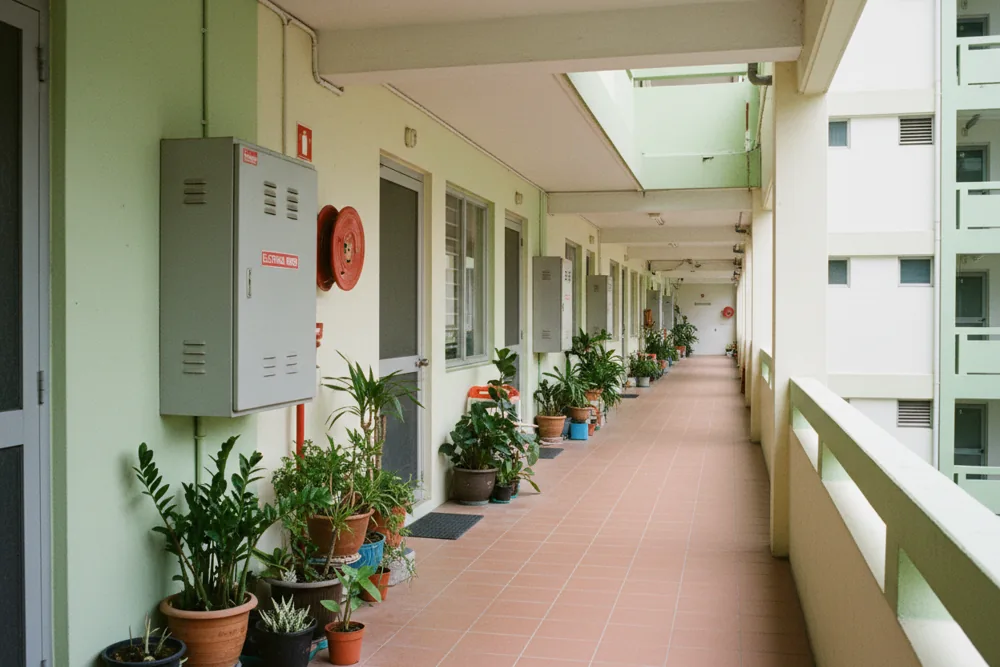
What HDB flat requests are usually about
Searches arrive as hdb electrician near me, hdb licensed electrician, hdb certified electrician, hdb electrician price, or hdb electrician services Singapore. Behind the wording, the job is nearly always one of these four.
 Urgent
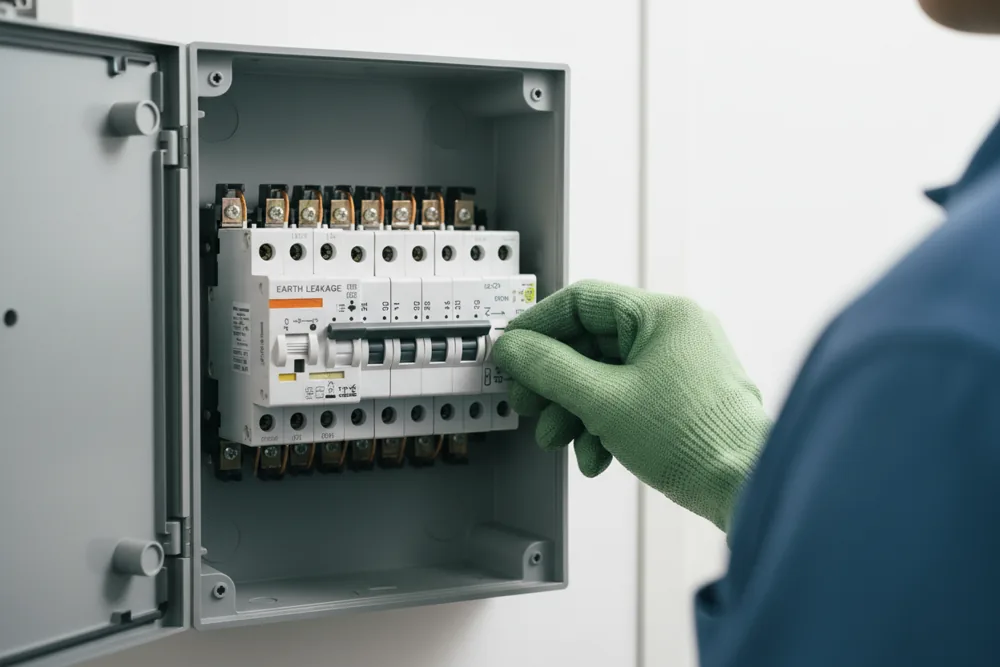
Power Trips & Dead Circuits
The breaker that will not stay on, or a flat that has gone dark. Diagnosis first: which circuit, and why, before anything is replaced.
Read more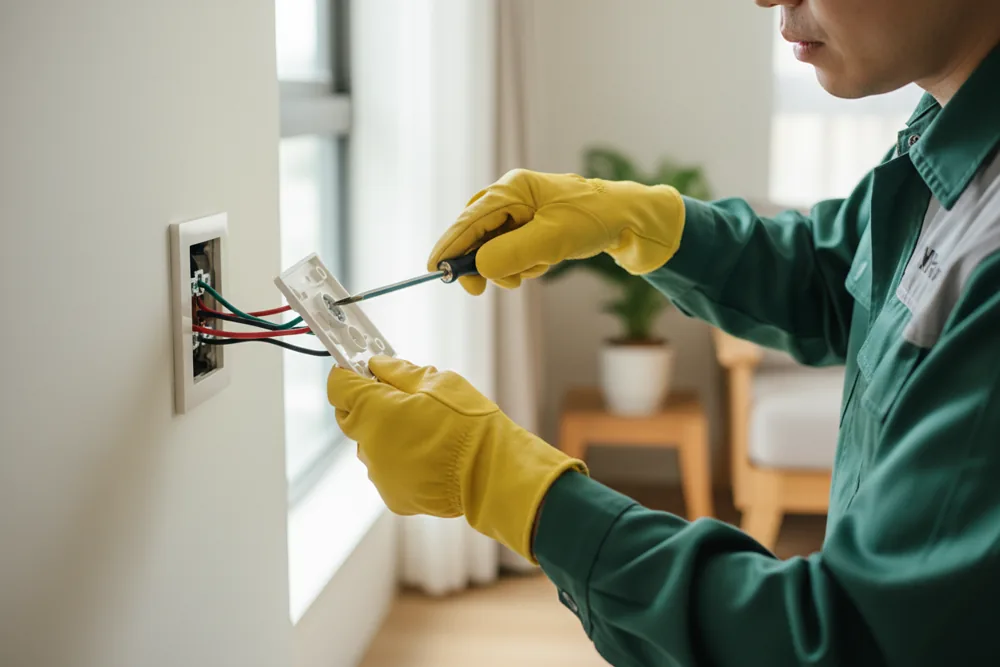 Install
Sockets & Power Points
An electrician for HDB flat socket work: extra 13A points, replacing tired faceplates, and 15A points for air-conditioners where the loading allows it.
Read more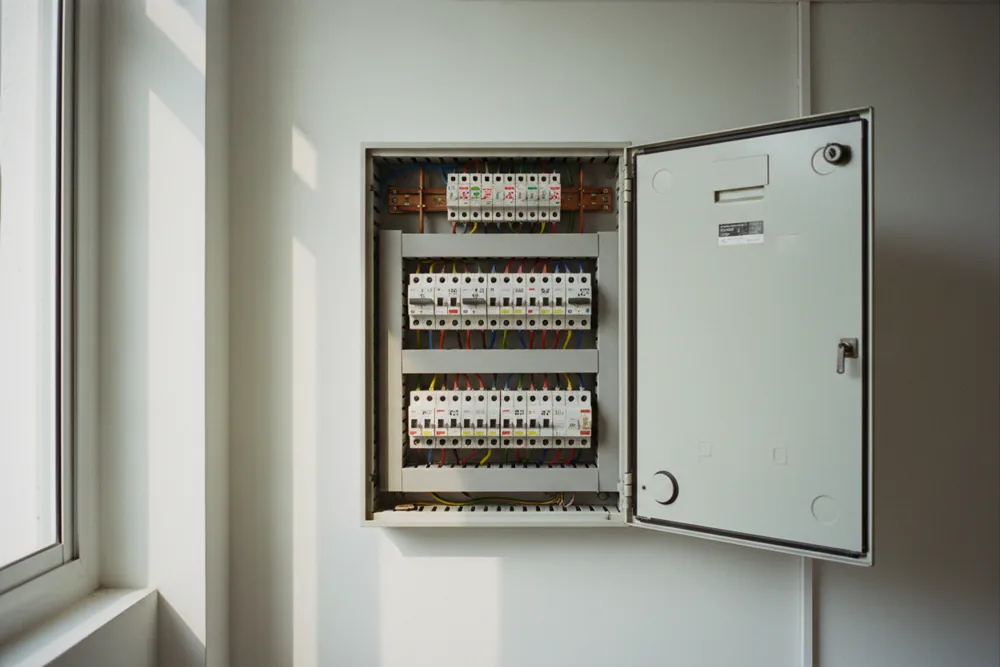 Repair
DB Box & Breakers
Distribution board replacement, RCCB and MCB faults, and boards that were never sized for what the flat now runs.
Read more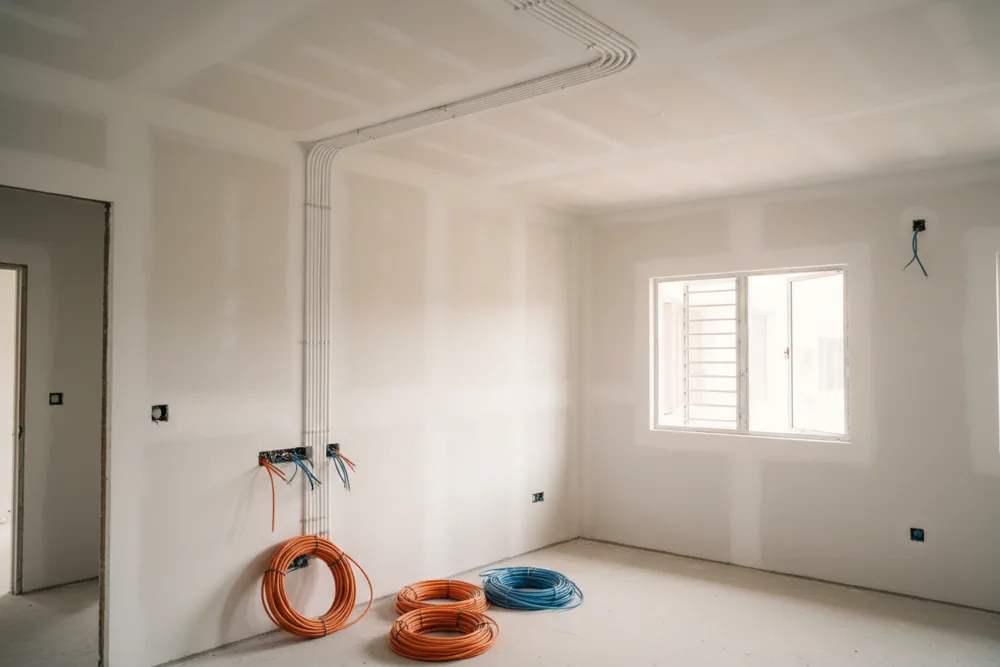 Project
Rewiring
Partial or whole-flat rewiring in ageing blocks, plus water heater points and isolators as part of the same scope.
Read moreThere is no HDB approved electrician list. Here is what people are actually looking for
What people search for
“HDB approved electrician list”, “list of HDB approved electrician”, even “HDB approved electrician list pdf”. Searches for the list have climbed roughly 55% over the past year, so the belief is spreading, not fading.
It spreads because the top results are listicles titled as approved lists. A publisher’s editorial shortlist is not an approval, but a headline rarely says so: and one of those articles ranks twice on this search, once as the article and once as its own Facebook post about the article.
What actually exists
The ELISE register. EMA’s public register of Licensed Electrical Workers. Free, no account, and the only authoritative check on whether the person in your flat may legally do the work.
HDB’s Directory of Renovation Contractors. Real, but a different thing: renovation firms, not individual electrical licences.
So the honest answer to “is this electrician HDB approved?” is that the question does not have an official answer. The question that does is “what is their LEW licence number?”, see what an HDB approved list actually is.
On this page
Which HDB electrical works need a permit
Needs an HDB permit
HDB states that flats without higher electrical loading require an HDB permit to install new 15amp power points for air-conditioners or other higher-capacity equipment and appliances.
HDB also publishes tables of electrical work that does not require a permit. Because those tables are revised, the reliable move is to check the current version rather than trust any third-party summary, including this one: HDB’s renovation guidelines for electrical works.
Permit and licence are not the same thing
Two different authorities, two different questions. HDB asks whether this alteration is permitted in this flat. EMA asks whether this person may legally do electrical work at all.
A job can need a permit and a licence, a licence only, or occasionally neither, and the answer to one tells you nothing about the other. Competitor pages routinely collapse the two into a single vague claim of being “HDB approved”, which is how the confusion started.
30A
Typical main switch in flats built before 1994
40A
Typical main switch in flats from 1994 onward
~1,500
Older blocks HDB is upgrading 30A to 40A under ELUP, targeted for 2030
Your flat’s electrical loading decides what you can add
Before the socket layout, before the aircon quote, before anything: what is the flat’s supply rated at? That single number governs how much can be added, and it is the reason two identical-looking flats get different answers to the same request.
Flats built before 1994 were generally provided with a 30A main switch. Flats from 1994 onward typically have 40A. Higher ratings, 60A and above, generally exist only where somebody applied for a supply upgrade. That is why HDB’s permit rule is written the way it is: the 15A point is the problem in a flat without higher loading, because the flat cannot comfortably carry it.
An electrician who adds heavy circuits without establishing this is building in nuisance tripping and calling it a finished job. Our guide to electrical loading in HDB flats goes through what the number means in practice.
Check your own block before anyone quotes you
Here is a check worth running yourself, because a reader who knows their own loading cannot be sold a solution to the wrong problem.
HDB publishes a Check Electrical Load of HDB Block e-service. Enter your block, get the loading. No account, under a minute, free. As far as we can tell, not one commercial page competing for this search links it.
If the answer comes back as lower loading and you were planning air-conditioning or a second heater, that is the conversation to have first: permit, upgrade, or a design that lives within what you have. All three are legitimate; being told about them after the quote is not.
ELUP: HDB is upgrading older blocks from 30A to 40A
This one is worth knowing before you pay anyone for more loading.
Under the Electrical Load Upgrading Programme, HDB is upgrading unit electrical power supply from 30A to 40A in around 1,500 older blocks, those built before 1 January 1994, and targets completing the programme by 2030. Design consultants carry out feasibility studies and detailed proposals block by block, with residents engaged once plans are ready.
No commercial page on this search result mentions it. That matters, because if your block is in scope, the sensible sequence may be to plan around the programme rather than to fund a private upgrade first. No web page can tell you your block’s status, but the programme exists and it is worth asking about.
Three-phase in an HDB flat: the honest answer
Requests for “three-phase in my flat” come up regularly, usually from someone who has read about it in the context of large appliances or EV charging.
Standard HDB flats are served by a single-phase supply, and individual flats are not converted to three-phase. What the person almost always needs is more loading on the existing single-phase supply, a different application, submitted by a Licensed Electrical Worker to SP Group on your behalf.
If somebody offers to convert your flat to three-phase, ask them to write down exactly what they mean by that before you agree to anything.
There's no one that knows best other than yourself, because you're going to be the one that's living there in the home.
Tell us the flat and the fault, and we pass the job to an electrician
Request an HDB electricianSupply side: call SP, not an electrician
If the stack, the floor or several units are out, the fault is on the network side. SP owns the supply up to and including your meter, and where the fault is theirs, the investigation and repair are not charged to you.
Paying a private electrician to attend an SP outage is money spent to be told to call SP. Check the corridor and a neighbour before you book anyone. Our guide to telling an SP outage from your own fault covers the rest.
Inside your installation, this one is yours
Neighbours fine, your flat dark: the fault sits after the meter, and the main switch or the RCCB is usually involved. That is a licensed electrician’s job, and if it is night-time with no lighting, it is a reasonable one to treat as urgent.
If a single circuit has tripped and nothing smells or feels warm, leaving that breaker off overnight and booking a normal-hours visit is a defensible choice, see handling a tripped HDB circuit, or an emergency electrician if it cannot wait.
Common property: the town council’s, at no cost to you
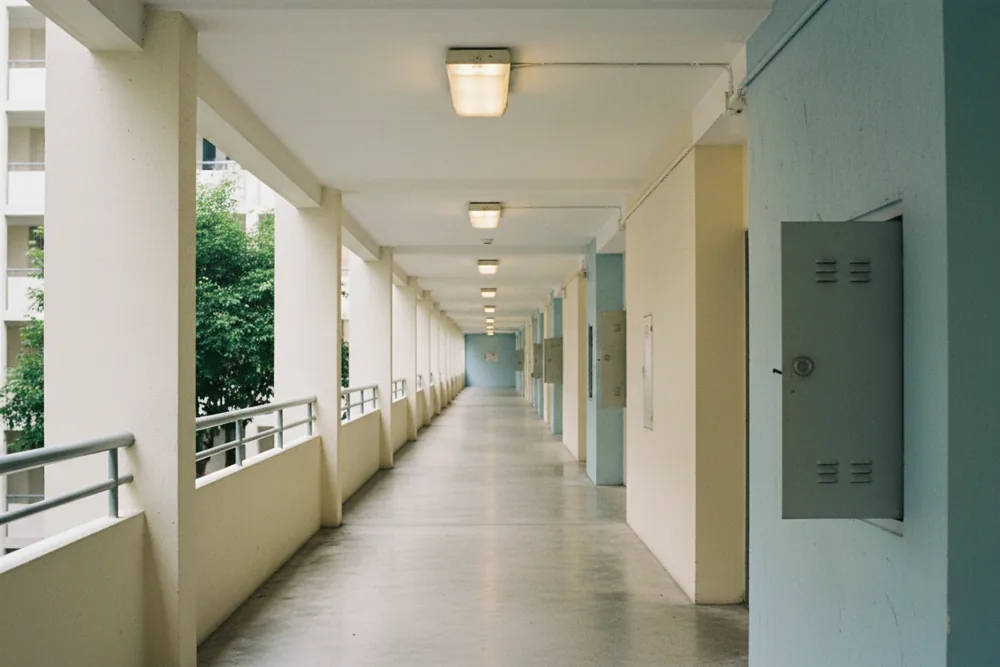
Corridor lighting, staircase and lift lobby fittings, risers and the common electrical services are the town council’s responsibility. You should not be paying a private electrician for any of it.
The boundary is your front door. Inside is yours; outside is theirs.
Town council or private electrician
Town council, at no cost to you
Corridor and staircase lighting. Lift lobby fittings. Risers and common electrical services. Anything in the block’s common property, which is inspected on its own schedule, at least once every six months for communal electrical services in multi-tenanted residential buildings.
Report it to the town council. This is one of the most common ways HDB residents spend money they did not need to spend, more in town council versus private repairs.
Yours, and chargeable
Everything from your distribution board inward: sockets, switches, lighting points inside the flat, the DB box itself, water heater and aircon circuits, and all the wiring between them.
This is the part a licensed electrician bills for, and the part where getting a written quote before work starts actually protects you.
The RCCB in your DB box, and why it trips
The device most often blamed for “faulty wiring” in an HDB flat is usually doing exactly what it was installed to do. RCCB installation has been mandatory since 1985 for new domestic premises and for rewiring, which means almost every occupied flat has one.
An RCCB trips on earth leakage. It is protecting a person, not an appliance. That is why repeatedly resetting it to keep the air-conditioner running through the night is the one response to avoid, you are switching off the protection rather than fixing the leak, and the usual cause is a failing appliance or moisture ingress that will not improve on its own.
Finding the circuit is methodical rather than clever: isolate everything, restore in halves, and let the trip tell you where it lives. What each breaker in an HDB board does explains what each device is actually for.
Wiring in an ageing flat
HDB flats are wired in concealed conduit, which is durable and also the reason rewiring is disruptive: the cable route is inside the structure, not clipped to a surface.
Age on its own is not a reason to rewire, and any quote that opens with your flat’s year of construction rather than its condition is selling rather than diagnosing. What genuinely signals end of life is condition, insulation that has gone brittle, discolouration or heat at accessories, repeated earth leakage that survives appliance elimination, and a distribution board with no spare capacity and no residual-current protection.
Partial rewiring is frequently the right answer where one circuit or one wet area is the problem. See the typical lifespan of flat wiring and, for scope and sequence, HDB flat rewiring.
Check loading and condition before you commit to a rewire
A pre-1994 block is likely on 30A and may be in scope for ELUP. Look up the block first. Then have the condition assessed rather than the age: a 40-year-old flat with sound insulation and a modern board may need nothing structural.
If you are buying rather than living there, the checks worth doing before completion are in a resale flat electrical checklist.
Use the defects liability route before you pay anyone
A new flat with an electrical defect is not automatically your bill. Report it through HDB’s defects process first, paying a private electrician to fix something still covered is a straightforward waste.
Where a BTO genuinely needs private work, it is almost always additions rather than repairs: extra points, heater circuits, aircon provisioning. Those still sit under the same permit and loading rules as any other flat.
Sequence matters more than price here
With an interior designer or renovation contractor on site, the electrical scope has to land in the right order: loading confirmed, permit filed where 15A points are involved, first fix done before tiling and carpentry close the walls.
Electrical work discovered after the carpentry is installed is the single most expensive kind of rework in a flat renovation, and it is almost always a sequencing failure rather than a technical one.
Renovating? Sequence the electrical work correctly
The order that avoids rework, in four steps.
One, confirm the loading using HDB’s block lookup, before the socket plan is drawn. Two, file any HDB renovation permit, the 15A points for air-conditioning are the usual trigger, because permit timing sits on the critical path, not beside it.
Three, first fix before the walls close. Conduit and cabling go in before tiling and carpentry. Adding a power point after the kitchen is installed costs several times what it costs before. Four, test and hand over with the board labelled, which is the difference between a flat that can be diagnosed later and one that cannot.
What a visit to your flat looks like
On any HDB electrical repair, the distribution board and main switch come first, always, what the flat is fed with, what protection is in place, and what has actually operated.
Then isolate and test rather than swap parts. Replacing a breaker that tripped correctly does not fix anything; it removes the evidence. The point of the visit is to identify the circuit and the cause, and only then to price the repair.
Ask for the quote before the repair, not after. Where a part has to be ordered, a good electrician leaves the affected circuit isolated and everything else working, rather than the flat mid-job. Replacing a distribution board or breaker covers what that work involves.
What published HDB electrical work costs look like
Published Singapore ranges
Ordinary-hours call-out or minimum charge, roughly S$70–80, from Singapore forum reporting.
13A double socket replacement, S$60–120, per a 2026 Singapore pricing page.
Light point install or replace, S$80–180 per point, same source.
DB box repair or replacement, typical HDB or condo, S$320–800, per a 2026 Singapore cost guide. Larger DB and rewiring works, S$1,000+.
How to read them
These are published market ranges collected from named third-party Singapore sources, not a quote for your flat. Every figure on this site is sourced or it does not get published.
What moves a number within its range: access, whether the circuit is concealed, the condition of what is already there, and the hour of day. The full set with sources is on our Singapore electrical pricing page.
The overcharging problem, stated plainly
Singapore homeowners talk about this constantly on local forums, and no page competing for this search addresses it. It is worth stating directly.
In one widely-read HardwareZone thread, a resident of a five-year-old flat with a burning smell paid S$120 for a midnight inspection and was quoted S$900 to replace burnt circuit-breaker components at around 1am. Quotes obtained the following morning for the same work came in at S$50 for the inspection and up to S$550 for the replacement. Reported spreads between a midnight quote and a next-morning quote on the same job run roughly 1.6x to 2.7x.
The honest reading is not that after-hours pricing is a scam, unsocial hours and a single-visit callout are real costs, and one contributor to that thread defended the price on exactly those grounds. It is that the decision is yours to make consciously: get the quote in writing before work starts, and where it is safe to isolate the circuit and repair in the morning, that is a legitimate choice rather than a reckless one.
What is never a legitimate choice is continuing to reset a breaker that is protecting you. See minimum charges for small flat jobs for what these charges normally cover.
When it hits you, then it's too late, because everything's really done.
The licence number, not a badge
Ask for the name and licence number of the Licensed Electrical Worker who will be in your flat. A genuine licence card carries a photo, name, IC number and licence number.
It is a normal thing to ask before you hire a licensed electrician for HDB work, and to ask before someone is standing in your hallway. Anyone who treats it as an insult has told you something useful.
ELISE: free, public, about a minute
EMA’s ELISE licence register is the authoritative check. Search by name or licence number and confirm the licence is real and current.
Step by step, with what the results mean: looking up an electrician licence on ELISE.
Any claim of being on an HDB approved list
It does not exist, so the claim carries no information, including when the firm making it is perfectly competent. Treat it as marketing language and go back to the licence number.
Same for the hdb certified electrician wording and “HDB registered electrician”. The certification being described is not issued by anyone.
What a good quote should include
No price-comparison table, because comparing a number against a flat nobody has seen is not information. What you can check is what the number contains.
 Step 1
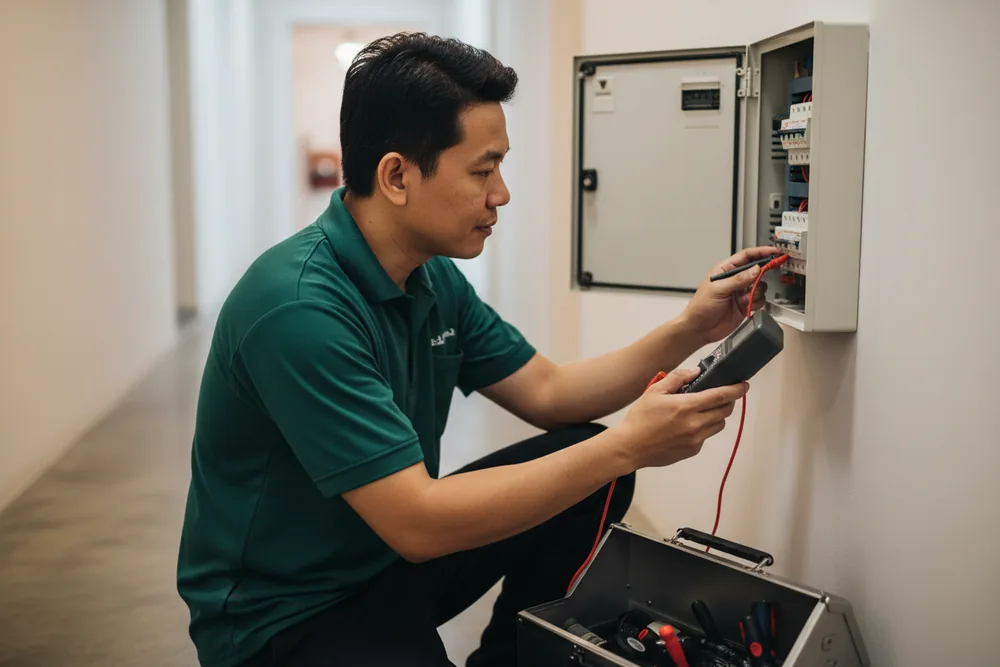
Diagnosis before parts
Ask which circuit, and why. Nothing should be replaced just to find out whether replacing it helps.
Read more Step 2
Written quote before work
Labour, materials, testing, statutory fees and GST shown separately, agreed before anything is started.
Read more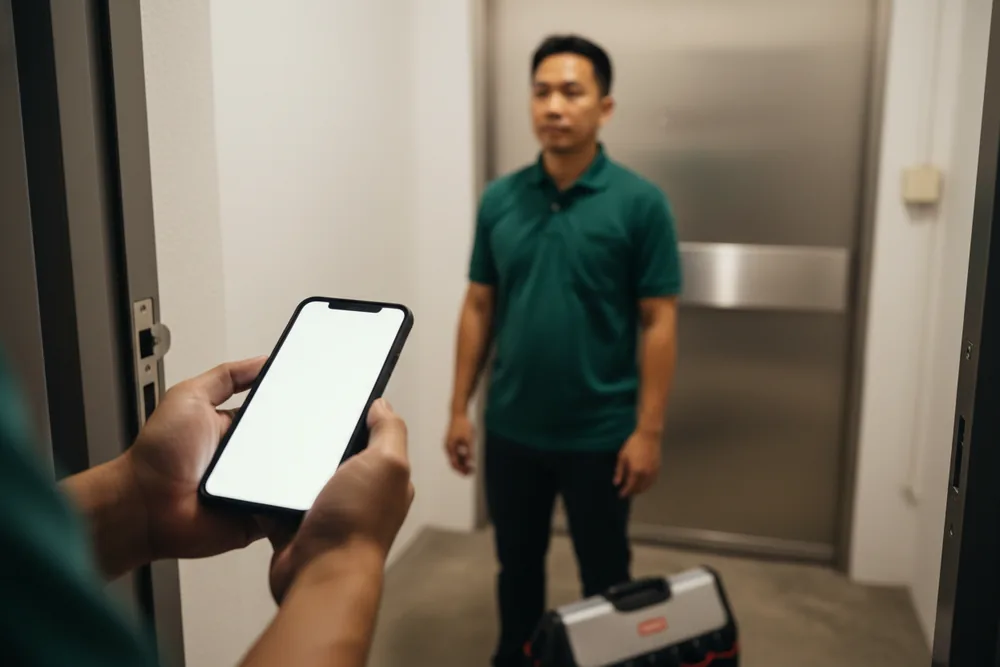 Step 3
A licensed worker, verifiable
Ask for the electrician’s name and check the licence on ELISE before entry.
Read more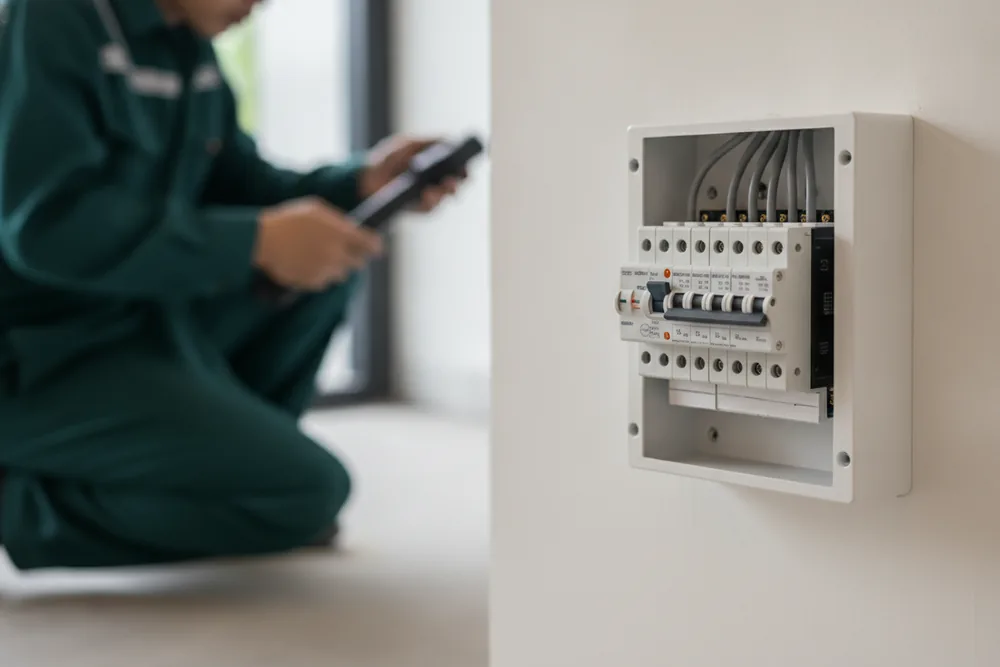 Step 4
Tested and labelled on completion
Ask for test results and a labelled board, so the next electrician can read the flat.
Read moreWhat this page does not claim
This site is not on any HDB approved list, because there is no such list to be on. Neither is anybody else claiming it.
Every figure on this page is a published market range from a named third-party Singapore source, not a quote. An earlier version of this page carried prices with no source attached; they have been replaced with sourced ranges.
This site does not publish DIY electrical instructions. Electrical installation work here is legally restricted to a Licensed Electrical Worker, and a page that helps you do it yourself would be helping you break the law and take a real risk.
HDB electrician FAQs
Is there an official HDB approved electrician list?
No. Searches for it are rising sharply, but there is no HDB register of approved electricians. HDB maintains a Directory of Renovation Contractors, which is a different thing and covers renovation firms rather than individual electrical workers. The register that actually matters is EMA’s, because electrical installation work in Singapore may only be carried out by a Licensed Electrical Worker, and you can check any LEW free on the ELISE register. Any site presenting its own shortlist as “HDB approved” is describing an editorial list, not an official one.
Does electrical work in an HDB flat have to be done by a licensed electrician?
Yes. Electrical installation work in Singapore is restricted by law to an EMA Licensed Electrical Worker, and a flat is no exception. EMA’s own guidance uses an HDB flat as its example, noting that work in a flat requires the services of an electrician while larger installations need a higher licence class. There is no DIY exemption for wiring, sockets, or anything in the distribution board, and this site will not publish instructions that imply otherwise.
Do I need an HDB permit for electrical work in my flat?
For some of it. HDB requires a permit to install new 15amp power points for air-conditioners or other higher-capacity appliances in flats without higher electrical loading. A range of other electrical work does not need a permit. The permit is HDB’s process and separate from the EMA licence, so a job can need both, one, or neither. Check the current HDB renovation guidelines for electrical works before scheduling, because permit timing affects your renovation sequence.
What electrical loading does my HDB flat have, and how do I check?
Most flats built before 1994 were provided with a 30A main switch, and flats from 1994 onward typically 40A. Ratings of 60A and above generally only exist where a supply upgrade was applied for. You do not have to guess: HDB publishes a Check Electrical Load of HDB Block e-service that returns the loading for your block in under a minute. Do that before anyone quotes you for extra power points, because it determines what can legally be added.
What is the Electrical Load Upgrading Programme?
ELUP is HDB’s programme to upgrade unit electrical power supply from 30A to 40A in around 1,500 older blocks built before 1 January 1994, which HDB targets to complete by 2030. It is worth checking whether your block is in scope before paying privately for more loading. Design studies and resident engagement happen block by block, so the useful step is to check your own block’s status rather than assume either way.
Can an HDB flat be upgraded to three-phase power?
Standard HDB flats are served by a single-phase supply and are not individually converted to three-phase. When people ask about three-phase, what they usually need is more loading on the existing single-phase supply, which is a different application handled by a Licensed Electrical Worker with SP Group. If an installer offers to convert your flat to three-phase, ask precisely what they mean before agreeing to anything.
My whole flat has no power. Do I call SP or an electrician?
Check your neighbours first. SP owns the network up to and including your meter, so if the whole stack or several units are affected, that is SP’s side and their investigation is not charged to you. If only your flat is dark and the main switch or RCCB is involved, the fault is inside your installation and you need a licensed electrician. If there is any burning smell, heat or visible damage, stop resetting and treat it as urgent: and if there is smoke or flame, that is SCDF on 995 first.
Is the corridor light my responsibility or the town council’s?
Common property: corridor lighting, risers, staircase and lift lobby fittings: sits with the town council, not with you, and a private electrician cannot bill you for something the town council handles at no cost. The boundary is your flat’s entrance: inside is yours, outside is theirs. It is worth knowing before you pay for a call-out, because this is one of the most common ways HDB residents spend money they did not need to spend.
How much does it cost to rewire a 4-room or 5-room HDB flat?
This page does not publish a single figure for this, because the honest range depends on whether it is partial or whole-flat, how much is concealed, and what the distribution board needs. Published Singapore guides put larger DB and rewiring works from around S$1,000 upward, with DB box repair or replacement typically S$320–800. Those are third-party published ranges, not a quote. For a flat-specific number, the scope has to be seen.
Related guides
 Blog
Blog
The “HDB approved list”, explained
Where the belief comes from, what HDB actually publishes, and the check that works.
Read more
Blog
HDB electrical loading explained
What 30A and 40A mean in practice, and what each will and will not carry.
Read more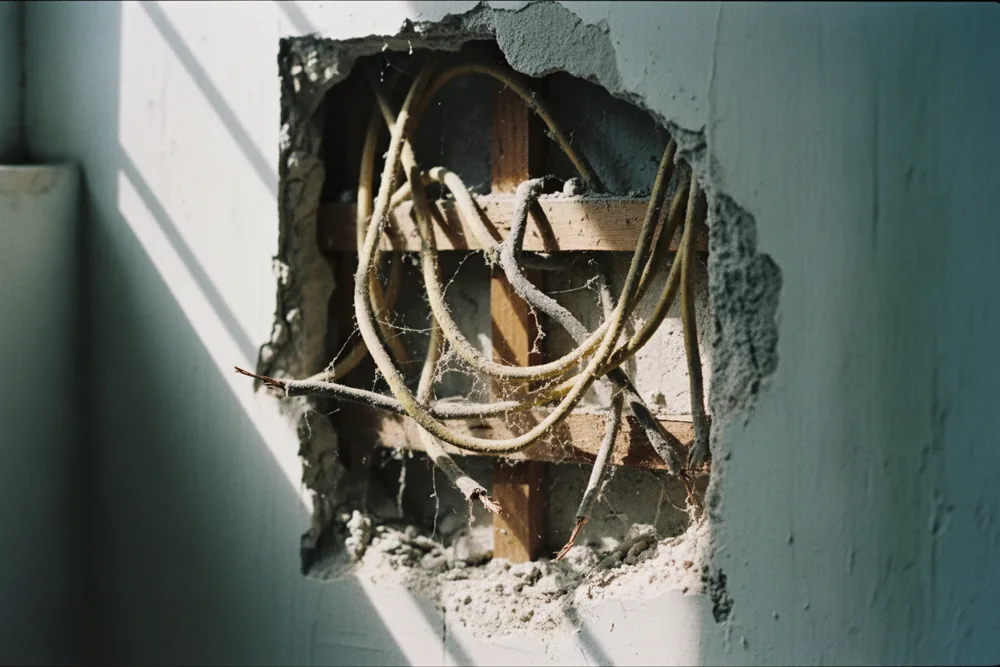 Blog
Blog
How long does HDB wiring last?
Design life versus real condition, and the signals that actually matter.
Read more
Blog
Town council or private electrician?
Where the boundary sits, and what you should never be billed for.
Read moreTell us about your flat
Request an HDB electrician in one message: flat type and town, what is failing or what you want added, and whether it is urgent. If you have already looked up your block's loading, include it, it usually shortens the whole conversation. We pass the job to an electrician; ask them for a visit window and what the assessment costs.
Loading… if the form does not appear, contact us there instead.
If you see smoke or fire, call SCDF at 995 before anything else.
Island-wide
Bedok, Jurong, Tampines, Ang Mo Kio, Bukit Merah and every other town
No storefront
Tell us the flat and the job, and we pass it to an electrician
Check ELISE
Ask for the electrician’s name and check the licence before entry
Not urgent? Start by looking up your block's electrical loading
Request an electricianCitations
Sources for every figure on this page
Every figure quoted above is a published third-party number, not an estimate of ours. Where sources disagree, both are shown. Collected and last reconciled 21 August 2026.
-
That electrical installation work is restricted to a Licensed Electrical Worker, and what to ask before letting anyone start.
EMA: engaging licensed electrical workers , checked 21 August 2026
-
Which electrical works in an HDB flat need approval, and the conditions attached.
HDB: renovation guidelines for electrical works , checked 21 August 2026
-
The free e-service that publishes the electrical loading of a given HDB block.
HDB e-service: check the electrical load of an HDB block , checked 21 August 2026
-
That the licence register is public, free and searchable before any work begins.
ELISE: EMA’s public licence register , checked 21 August 2026
-
Parliamentary answer on the programme to upgrade electrical supply for older HDB blocks.
MND written answer: upgrading electrical power supply for HDB blocks , parliamentary reply
-
A Singapore homeowner’s account of planning electrical points during a BTO renovation.
“Life with Maniac” (Singapore): planning electrical works in a 4-room BTO , published 23 April 2022
Published prices move. If a figure here no longer matches the source, the source wins, tell us and it gets corrected rather than quietly left to rot.
Last updated