Repairs & troubleshooting · Singapore
Electrical Repair Singapore
A breaker that will not stay on is telling you something. Emergency electrical repair Singapore, or a fault that can wait until morning: this page starts where every competitor stops: what each tripping pattern actually means, how to find the faulty circuit yourself before anyone arrives, and what a circuit breaker replacement should cost, with the figures sourced rather than invented.
- Ask for diagnosis before parts
- Check the electrician’s licence on ELISE
- Ask for a written quote before the repair
The repairs people most often ask about
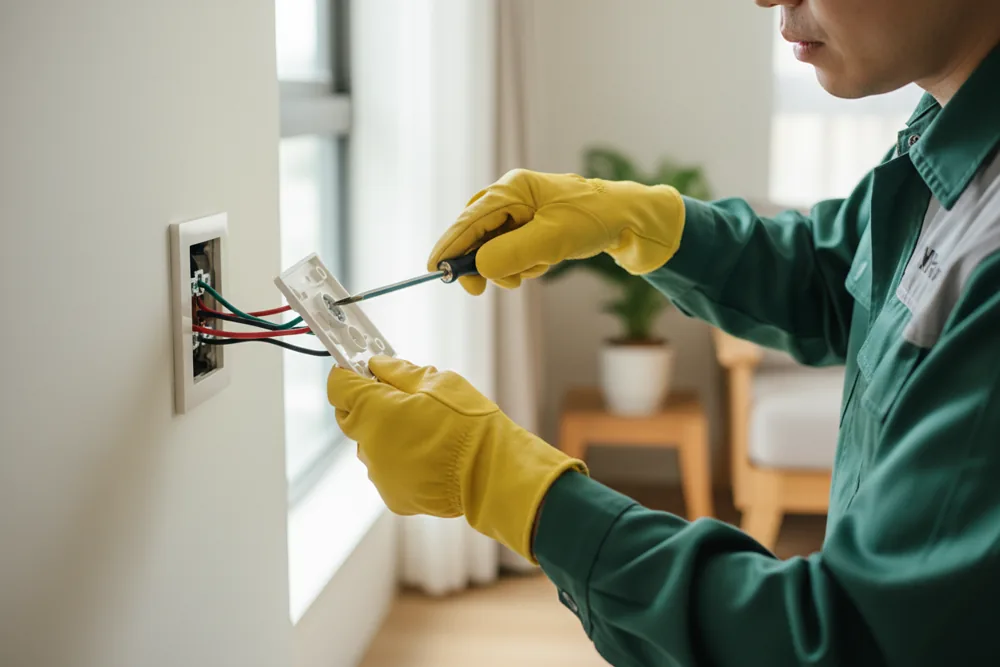
Most electrical repair services Singapore searches arrive as a symptom rather than a job title. Residential electrical repair Singapore, an electrical repair Singapore price check, or simply a breaker that will not reset, behind the wording it is usually one of these four.
 Repair
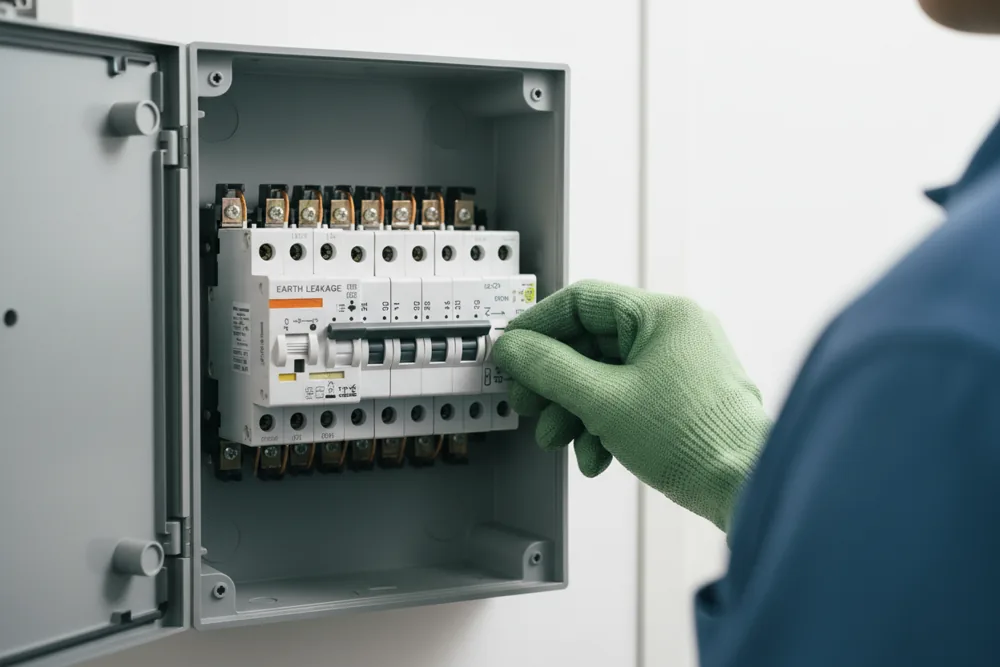
Breakers & DB Boxes
Electrical fault repair Singapore-wide: tripping breakers, RCCB faults, and distribution boards that were never sized for what the property now runs.
Read more
Install
Sockets & Power Points
Dead sockets, loose or scorched faceplates, and adding or replacing a power point where the loading allows.
Read more Install
Lights & Ceiling Fans
Fittings that have stopped working, flickering that is not the bulb, and replacements on existing wiring.
Read more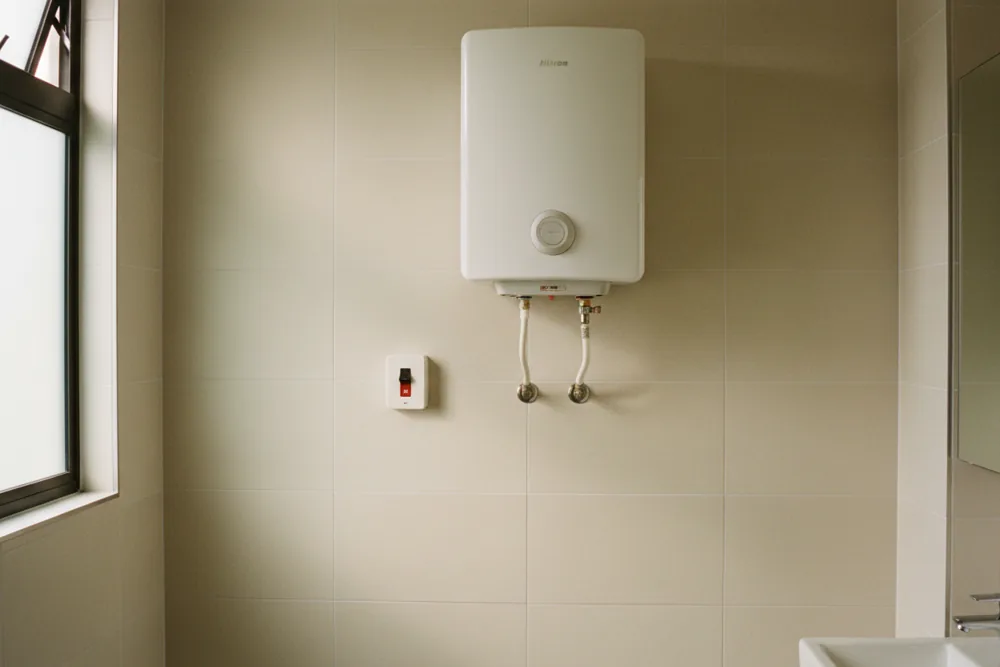 Circuit
Water Heater Circuits
Heater points, 20A isolators, and the earth leakage faults that ageing heaters are notorious for causing.
Read moreDo not reset. This is the one that cannot wait.
Smoke or flame is SCDF on 995, first, before anything else on this page.
Short of that, the burning smell electrical faults give off is the signal that matters: a smell, a faceplate or breaker that is warm to the touch, browning or blistering, arcing or buzzing. Isolate that circuit if you can safely identify it, stop using it, and get a licensed electrician out. Heat means energy is being dissipated somewhere it should not be, and that process accelerates rather than settles down overnight. This is what an urgent electrician call-out exists for.
Usually safe to isolate tonight and repair tomorrow
One circuit is off, the rest of the property is normal, nothing smells or feels warm. You reset it once, it went again, and you left it off. That is the textbook case for waiting.
Leave that breaker off, unplug everything on the affected circuit so a failed appliance cannot re-present the fault tomorrow, and book a normal-hours visit. You have removed the risk and kept the daytime rate: which, as the pricing section below shows, is not a small difference.
Establish whose fault it is before you pay anyone
Check the neighbours. If the stack or several units are out, it is supply-side and SP’s investigation is not charged to you. If it is only you, the main switch or RCCB is involved and the fault is inside your installation.
No lighting at night with a board-level fault is a reasonable same day electrical repair call-out. Sixty seconds of checking first can save the whole fee, see how to tell an SP outage from a fault at home.
Diagnose by symptom: what each tripping pattern usually means
What it does
Trips the instant you reset it.
Trips after several minutes, or under load.
Trips only when one appliance runs.
Trips in wet weather, or after cleaning.
Trips at no consistent time at all.
What that usually means
A live fault on that circuit: a short, or substantial earth leakage. It will not clear itself and repeated resetting achieves nothing.
Load or heat. Either the circuit is carrying more than it was designed for, or a connection is deteriorating and warming up as current flows.
That appliance. This is the single most common cause of electrical troubleshooting Singapore call-outs, and it costs the least to establish, an evening of your own time.
Moisture ingress: bathroom, kitchen, or an outdoor-facing point. Very common in Singapore, and often seasonal enough to look mysterious.
Intermittent faults are usually mechanical: a loose connection that moves, or a cable under strain. These are the ones worth photographing when they happen.
Find the circuit yourself before you call
This is a method worth doing yourself first, because a caller who already knows which circuit and which appliance turns a diagnostic visit into a repair visit.
Switch off and unplug everything on the affected circuit. Then reset. If it holds, you have proved the wiring is not the immediate problem.
Restore in halves. Plug things back one at a time, waiting between each. Earth leakage faults often need a minute to present, so speed defeats the purpose. Whatever trips it is your answer.
Write down what was running when it first went, and whether it trips instantly or after a delay. That single sentence tells an electrician more than a photo of the board.
What this is not: opening the distribution board, changing a device, or touching wiring. Stay on the outside of the board. More on the first five minutes in the first steps after a power trip.
The appliance is the culprit more often than the wiring
Worth saying plainly, because it argues against a quick sale: most nuisance tripping in Singapore homes is caused by something plugged in, not by the installation.
Water heaters are the classic, elements degrade and start leaking to earth long before they stop producing hot water. Kettles, ageing air-conditioners and fridges follow. Then moisture: bathroom and kitchen circuits, and anything on an outdoor-facing wall during a wet spell.
Why this matters commercially: an electrician who quotes for rewiring before eliminating appliances is quoting for a problem nobody has identified yet. Eliminating appliances costs an evening of your time and nothing else. Water heater circuits and isolators covers the most frequent offender.
RCCB, MCB and what each one is protecting
MCB, protects the cable
A miniature circuit breaker trips on overcurrent: too much load, or a short circuit. Its job is to stop the cable overheating inside your wall.
When an MCB goes, the usual causes are genuine overload, too much on one circuit, or a fault in a fitting or appliance drawing current it should not.
RCCB, protects a person
A residual-current circuit breaker trips on earth leakage, current going somewhere other than back down the neutral. That path can be a person.
RCCB installation has been mandatory since 1985 for new domestic premises and for rewiring, so almost every occupied Singapore home has one. So when an RCCB keeps tripping, repeatedly resetting it to keep the aircon running is the one response to avoid: you are switching off the protection, not fixing the leak. Why an RCCB trips when an MCB does not.
Tell us the symptom and what you have already tried
Get an electrical repair quoteYou flip the breaker around and you're like, whoa, that thing's melted on the back, and it's things that from the front you would just have no idea about.
Circuit breaker replacement: what it should cost
What the SERP asks
The circuit breaker replacement cost question is the one this SERP cannot stop asking. Google’s own People Also Ask block asks “How much does it cost to replace a circuit breaker in Singapore?”: and then asks it again, alongside “How much will an electrician charge to replace a breaker?”
Four of the six PAA questions here are about price. Not one page ranking on the first page answers any of them with a figure. That silence is the reason people arrive at this search already suspicious.
What the published evidence shows
Published Singapore cost guides put DB box repair or replacement at S$320–800 for a typical HDB or condo, and larger DB works from S$1,000 upward.
Community reporting shows the spread more starkly: S$900 quoted at 1am versus up to S$550 the next morning for the same components, and in a separate thread S$800 charged where a second opinion came back at S$300.
Sourced third-party ranges, not a quote. More detail on replacing a circuit breaker or distribution board.
The overcharging problem, with the actual numbers
Singapore homeowners discuss this constantly and no competitor page touches it, so here it is with attribution.
In a widely-read HardwareZone thread on a midnight breaker quote, the original poster: a five-year-old flat, flickering kitchen lights, then a clicking sound, then a burning smell, paid S$120 for a midnight inspection and was quoted S$900 to replace burnt circuit-breaker components at around 1am. Next-morning quotes from other electricians: S$50 to inspect, S$550 maximum for the same replacement.
Reported spreads between a midnight quote and a next-morning quote on the same job run roughly 1.6x to 2.7x. The honest reading is not that after-hours pricing is a scam, one contributor to that same thread defended it on the grounds that changing electrical parts at midnight carries real risk, and unsocial hours plus a single-visit callout are genuine costs.
The defensible advice is simply this: get the quote in writing before work starts, and make the isolate-now-repair-tomorrow call consciously rather than by default. The original poster’s own stated lesson was to deal with electrical faults early, while there is still time to collect more than one quote.
Almost certainly the heater, not the circuit
A storage heater whose element has begun leaking to earth will trip an RCCB reliably while still producing hot water. The tell is the correlation: it goes when the heater is on and never when it is off.
Test by isolating the heater at its 20A isolator and leaving it off for a day. If nothing trips, you have your answer, and the repair is a heater question rather than a wiring one.
A break in the ring or radial, or one failed accessory
Sockets die in groups because they share a circuit. When a whole room goes and the breaker has not tripped, the usual cause is a broken connection at one accessory, often a socket that was disturbed during cleaning or furniture moving.
This one needs testing rather than guessing, because the failed accessory is not necessarily a dead one; it can be the first in the chain that still works perfectly.
Look upstream, this one can be serious
Flickering confined to one fitting is usually the fitting or the lamp. Flickering across the whole property at once is different: it points upstream, at the main switch, an incoming connection, or the supply itself.
Property-wide flickering combined with any warmth or smell at the board is a same-day call, not a next-week one. See the causes of flickering lights for the full separation.
Renting? Who pays for what
A question no competitor page addresses, and a real reason people hesitate before booking.
The installation belongs to the landlord: the wiring, the board, the fixed accessories. Fair wear and tear on those is generally the landlord’s cost. Damage caused by the tenant, and faults originating in the tenant’s own appliances, generally are not. Most Singapore tenancy agreements also carry a minor-repair threshold, so it is worth reading yours before assuming either way.
The practical move, whichever side you are on: get the fault documented in writing before the repair. A written diagnosis naming the cause settles the question quickly and protects both parties, so ask the electrician for one whether or not the landlord has. For flats, see repairs in an HDB flat.
What a sound repair visit should look like
The distribution board and main switch come first, what the property is fed with, what protection is in place, and what has actually operated.
Then isolate and test rather than swap and hope. The point of the visit is to identify the circuit and the cause; the repair follows from that, and is priced once it is known rather than estimated in advance of knowing anything.
Ask for the quote before the repair. Where a part has to be ordered, a good electrician leaves the property in a safe, defined state: affected circuit isolated, everything else working. Ask for the board to be labelled too, so the next fault can be diagnosed.
When a repair is no longer the answer
Sometimes the honest recommendation is to stop repairing. The signals are reasonably clear.
Repeat failures on the same circuit after the appliance has been eliminated. Insulation breakdown showing across several circuits, not one. A board with no spare ways and no residual-current protection, where every addition means another compromise. Accessories that are scorched in more than one location, which points at a systemic problem rather than a local one.
Partial rewiring: one circuit, or one wet area, is very often the proportionate answer, and costs considerably less than the whole-property version that gets quoted reflexively. See partial or whole-property rewiring.
What published repair costs look like
Published Singapore ranges
Ordinary-hours call-out or minimum charge, roughly S$70–80, from Singapore forum reporting.
13A double socket replacement, S$60–120, per a 2026 Singapore pricing page. Brand upgrades add roughly S$20–40.
Light point install or replace, S$80–180 per point. Ceiling fan on existing wiring, S$80–220.
DB box repair or replacement, S$320–800. Fuel surcharge around S$10 per visit; urgent slot around S$30 more.
How to read them
These are published market ranges from named third-party Singapore sources, not a quote. Every figure on this site is sourced or it does not get published.
What moves a number within its range: access, whether the circuit is concealed, the condition of what is already there, parts quality, and the hour of day. The full set with sources is on the sourced Singapore electrical price guide page.
Why two quotes for the same fault differ
A wide spread reads as dishonesty. Usually it means the two quotes are not for the same thing.
Whether diagnosis is included or billed separately. The lower number frequently assumes the fault is already known. Parts quality. A bottom-of-range RCCB and a reputable one are not the same component, and only one of them is worth putting in a board you rely on.
Hour of day and access. Documented above, and the largest single variable. Making good. Chasing, patching and repainting after a concealed repair is real work, frequently excluded and rarely noticed until the end. See how call-out fees add up on a small repair.
The fix is not to chase the lowest number, and not to assume the lowest number is the dishonest one. It is to make both quotes cover the same four items.
The licence number of the person attending
Ask for the name and licence number of the Licensed Electrical Worker who will actually do the work. A genuine licence card carries a photo, name, IC number and licence number.
It is a normal thing to ask before you hire a licensed electrician for repairs, and to ask before someone is standing in your hallway. Anyone offended by it has told you something useful.
ELISE: free, public, about a minute
EMA’s ELISE licence register confirms whether a licence is real and current. Search by name or number.
Step by step: verifying a repair electrician on ELISE.
Handyman branding on electrical work
Several of the businesses ranking for this search are branded as handyman services. Handyman branding does not change the law: electrical installation work requires a Licensed Electrical Worker, whoever is holding the screwdriver.
Plenty of handyman firms do engage licensed workers for the electrical portion, and that is fine. The question to ask is simply which licensed worker, and what is their number.
What a repair quote should include
No price-comparison table, because comparing a number against a fault nobody has seen is not information. What can be set out is what the number should contain.
 Step 1
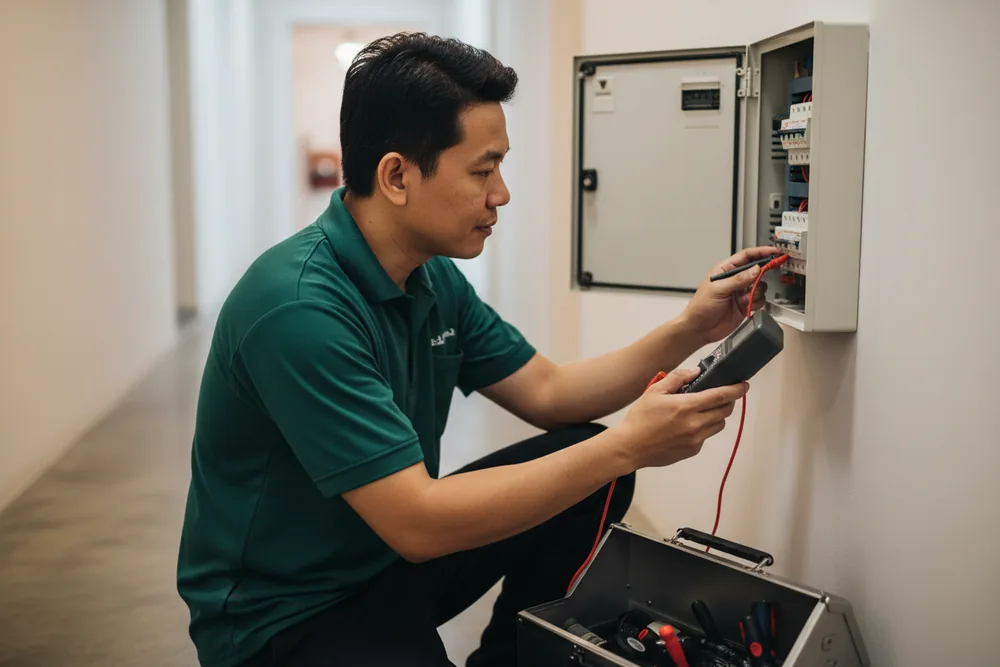
Diagnosis before parts
Which circuit, and why. Nothing should be replaced just to find out whether replacing it helps.
Read more Step 2
Written quote before work
Ask for it in writing before anything starts, including whether the call-out is absorbed into the repair.
Read more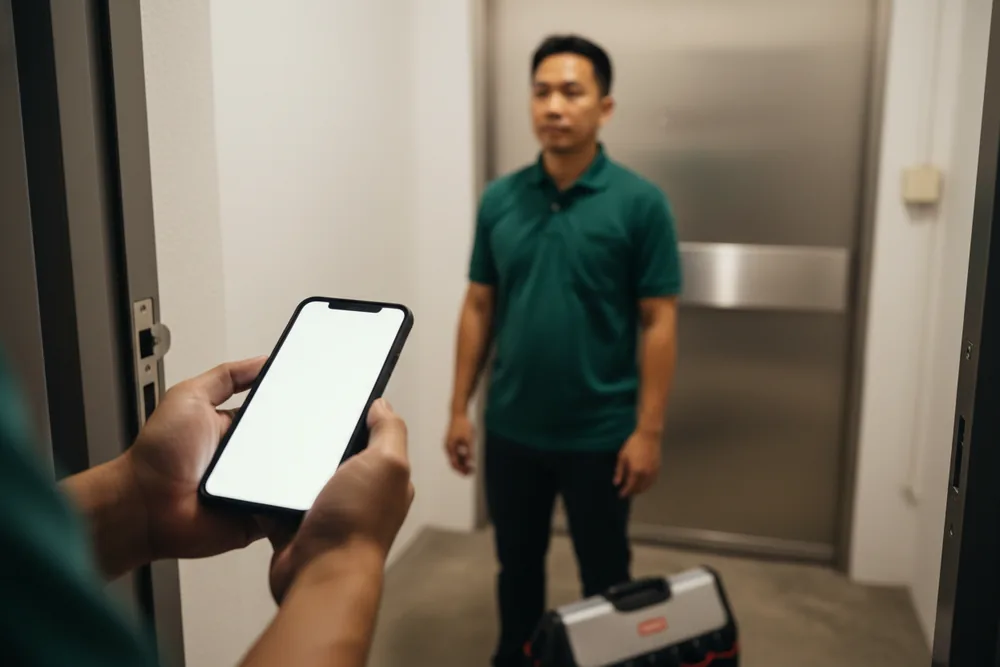 Step 3
A licensed worker, verifiable
Ask for the name and licence number, and check it on ELISE before entry.
Read more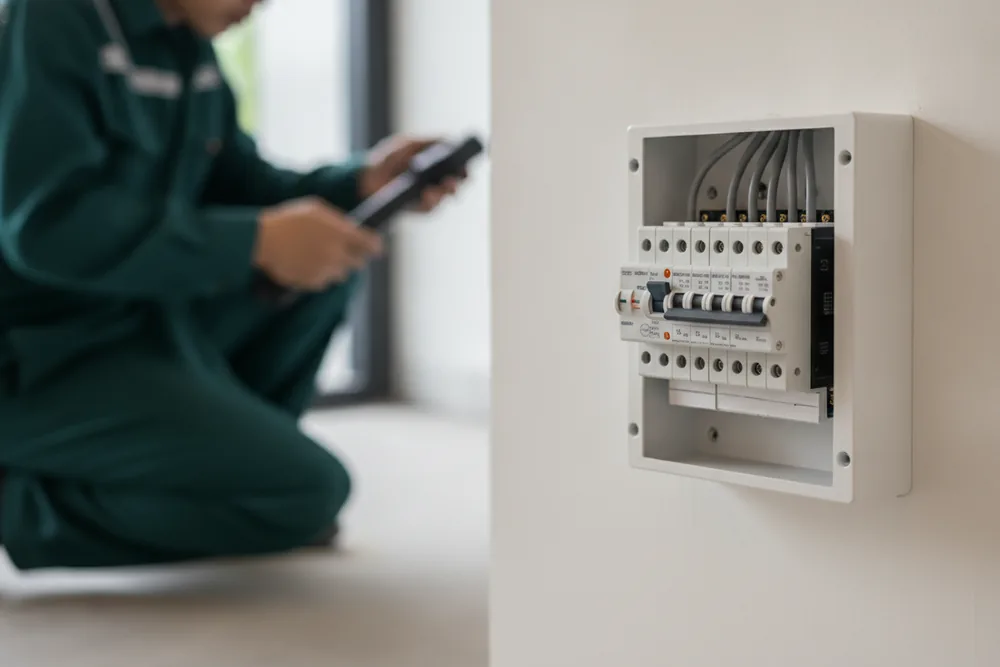 Step 4
Tested and labelled on completion
Ask for the circuit to be tested, the board labelled, and a written note of what the fault was.
Read moreWe've cleared the fault, which means it definitely was that cable, but obviously the problem is still there and needs to be fixed.
What this page does not claim
No fixed repair price without seeing the fault. Be wary of a number given over the phone for a fault nobody has diagnosed: it is designed to win the call, not to survive it.
Every figure on this page is a published market range from a named third-party Singapore source, with the source stated. None of them is a quote.
This site does not publish DIY repair instructions. The half-split method above deliberately stops at the outside of the distribution board, because everything past that point is legally restricted work and genuinely dangerous.
Electrical repair FAQs
How much does it cost to replace a circuit breaker in Singapore?
This SERP’s own People Also Ask block asks the question twice, and no page-1 result answers it with a number. Here is what the published Singapore evidence actually shows. In a widely-read HardwareZone thread, a homeowner was quoted S$900 at around 1am to replace burnt circuit-breaker components; next-morning quotes for the same work came back at up to S$550. A separate thread records S$800 charged for a breaker job that an HDB-approved electrician subsequently quoted at S$300. Published cost guides put DB box repair or replacement generally in the S$320–800 range. Those are third-party published figures, not a quote, and the honest answer for your board is that it depends on what actually failed.
Why does my circuit breaker keep tripping?
Why does my breaker keep tripping? Because something is still faulty, a breaker that trips is doing its job. The pattern tells you a lot. Tripping the instant you reset points to a live fault on that circuit. Tripping after several minutes points to load or heat. Tripping only when one appliance runs points at that appliance. Tripping in wet weather or after cleaning points to moisture ingress. What it almost never means is that the breaker itself is faulty, which is why replacing the breaker without finding the cause is the most common wasted repair in Singapore homes.
Can I reset a tripped breaker myself?
Resetting a breaker at the board is fine, once. What is not fine is repeatedly resetting one that keeps going, especially an RCCB, because that device is protecting a person from earth leakage rather than protecting an appliance. And if anything smells of burning, feels warm, or looks discoloured, do not reset at all, isolate that circuit and stop using it. Opening up the board, changing a breaker or touching wiring is electrical installation work and legally restricted to a Licensed Electrical Worker.
Is a burning smell from a socket an emergency?
Yes, treat it as one. A burning smell, a warm faceplate or breaker, browning or blistering around an outlet, or any arcing or buzzing sound all mean energy is being dissipated where it should not be, and that process accelerates rather than settles. Isolate the circuit if you can safely identify it, stop using it, and get a licensed electrician out. If you can see smoke or flame, that is SCDF on 995 first, nothing on this page displaces that.
How do I work out which circuit is faulty before calling?
Use a half-split. Switch everything on the affected circuit off and unplug it, then reset. If it holds, restore appliances one at a time and wait between each: the one that trips it is your answer, and it is usually an appliance rather than the wiring. Note what was running when it first went, and whether it trips instantly or after a delay. Doing this before the visit genuinely shortens it, and it costs you nothing. Stay outside the distribution board while you do it.
Is it the wiring or one of my appliances?
Statistically, the appliance. Water heaters, kettles, ageing air-conditioners and fridges are the common causes of earth leakage in Singapore homes, and moisture in bathroom and kitchen circuits accounts for a good share of the rest. This matters commercially as well as technically: an electrician who quotes you for rewiring before eliminating appliances is selling you a solution to a problem that has not been identified yet.
Do I need a licensed electrician for a small repair?
Often, yes. Electrical installation work in Singapore is restricted by law to an EMA Licensed Electrical Worker, and it is the exact work that decides, not the size of the job. Adding a socket or swapping a breaker is installation work; plugging in an appliance is not. You can check any electrician’s licence free on EMA’s ELISE register before you let them start, and the licence card itself shows a photo, name, IC number and licence number.
Is there a call-out fee even if nothing gets repaired?
Usually there is a minimum charge or call-out fee, and Singapore forum reporting puts the ordinary-hours figure at roughly S$70–80. Published 2026 pricing pages also list a per-visit fuel surcharge of around S$10 and roughly S$30 more for an urgent or customer-requested time slot. Some firms waive the call-out when the repair proceeds and some do not, and that single detail is worth confirming in writing before anyone is dispatched rather than discovering it afterwards.
My whole unit is dark. Do I call SP or an electrician?
Check whether your neighbours are affected first. SP owns the supply network up to and including your meter, and where the fault is on their side the investigation and repair are not charged to you. If only your unit is out and the main switch or RCCB is involved, the fault is inside your installation and that is a licensed electrician’s job. Getting this the wrong way round costs an hour you probably do not have, which is why it is worth doing the sixty-second check.
Related guides
 Blog
Blog
Power trip: what to do first
The first five minutes, in order, before you call anyone.
Read more
Blog
RCCB, ELCB and MCB explained
What each device protects, and which one is protecting a person.
Read more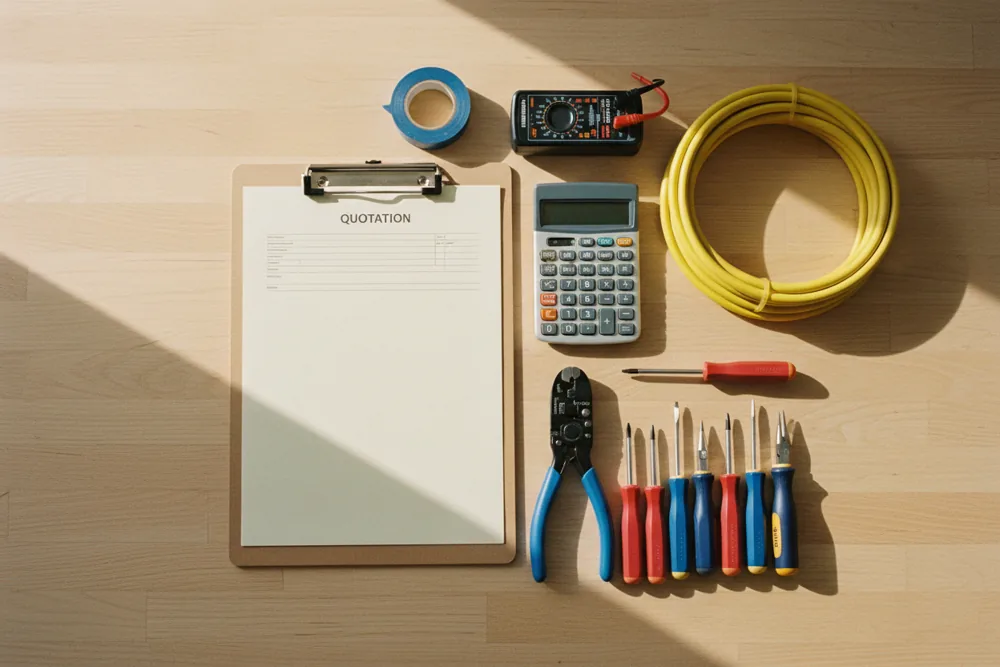 Blog
Blog
Call-out fees and minimum charges
What these charges normally cover, and when they get waived.
Read more
Blog
Why your lights flicker
The difference between one annoying fitting and a genuine warning.
Read moreDescribe the fault
Book an electrician Singapore-wide in one message: what is failing and since when, what you have already tried, and your property type and area. If you have run the half-split above, tell us what you found, as it usually turns a diagnostic visit into a repair visit. We pass it to the electrician who takes the job; ask them for a visit window and what the assessment costs.
Loading… if the form does not appear, contact us there instead.
If you see smoke or fire, call SCDF at 995 before anything else.
Island-wide
HDB, condo, landed and business premises
Diagnosis first
Ask for the circuit and the cause before any part is replaced
Check the licence
Ask the electrician for their name and licence number, then check it on ELISE
Not sure it needs an electrician yet? Run the half-split first, then send us what you found
Send us the symptomCitations
Sources for every figure on this page
Every figure quoted above is a published third-party number, not an estimate of ours. Where sources disagree, both are shown. Collected and last reconciled 21 August 2026.
-
That electrical installation work is restricted to a Licensed Electrical Worker, and what to ask before letting anyone start.
EMA: engaging licensed electrical workers , checked 21 August 2026
-
That the licence register is public, free and searchable before any work begins.
ELISE: EMA’s public licence register , checked 21 August 2026
-
Community reporting of after-hours quotes: cited as reported experience, not as a rate card.
HardwareZone forum thread: overcharged for a midnight breaker replacement , January 2023
-
Published 2026 Singapore price ranges for common electrical jobs.
-
Fault-finding method: why a successful reset is not a diagnosis. Cited for method only: UK practice, not Singapore regulation.
Artisan Electrics (UK): “Fault Finding Electrical Circuits”, cited for method only , published 20 August 2020
Published prices move. If a figure here no longer matches the source, the source wins, tell us and it gets corrected rather than quietly left to rot.
Last updated