Price guide · Singapore
Electrician Singapore Price List
Every other electrician Singapore price list, including every residential electrician Singapore price list, asserts its numbers. This one cites them. Each electrician cost Singapore figure below names the source it came from and the date it was collected: and where the published sources contradict each other, which they frequently do, you get both numbers and an explanation rather than an average.
- Every figure sourced and dated
- Published market ranges, not our rates
- Contradictions shown, not averaged
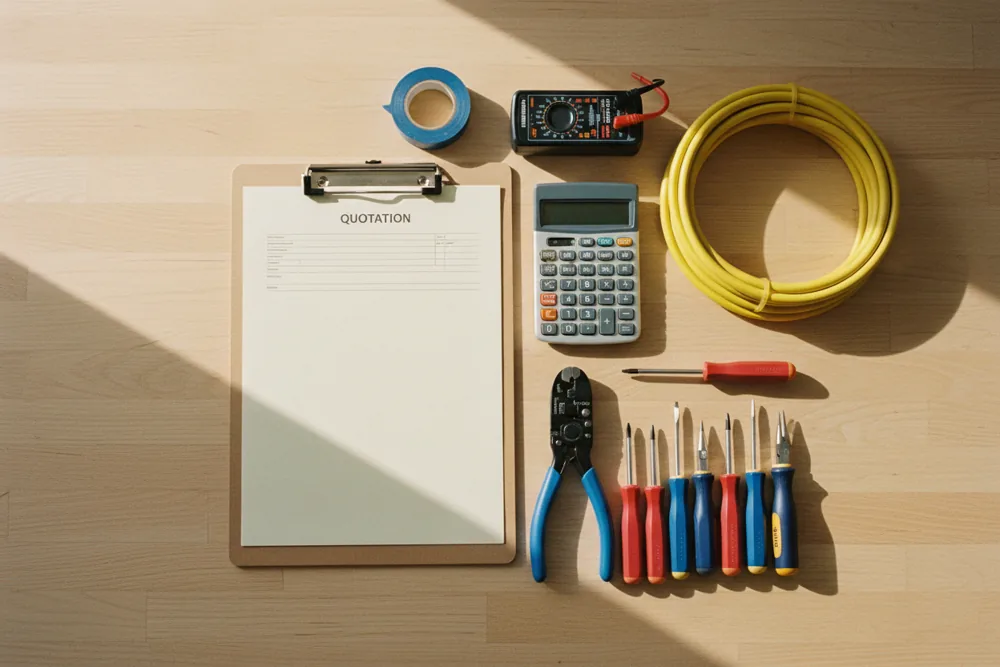
S$40–80
Ordinary-hours call-out or minimum charge, across published Singapore sources
S$60–220
Where most small jobs land: sockets, light points, ceiling fans
18 Aug 2026
Date every figure on this page was collected
Call-out fees and minimum charges
What the sources say
S$70–80: ordinary-hours minimum or call-out, from Singapore forum reporting.
S$40–80: basic call-outs, per a Singapore price guide dated December 2025.
S$50, stated minimum transport allowance at one provider’s 2026 price list.
Taken together, a call out fee Singapore-wide sits in a S$40–80 band, with the variation depending mostly on whether transport is billed separately.
What sits on top
S$10 per visit: fuel surcharge, per a 2026 provider pricing page.
S$30: urgent or customer-requested time slot, same source.
Whether the call-out is absorbed when work proceeds is entirely provider-specific and is the single most common cause of a bill that feels larger than the quote. Ask in writing before dispatch, more in call-out fees and minimum charges explained.
Sockets, points and lighting
Sockets and power points
S$60–120: 13A double socket replacement (FixMove, 2026). Brand upgrades add roughly S$20–40.
S$120–220, new power point on surface trunking (same source).
From S$80, a single 13A point on a suitable existing circuit.
From S$40: an electrical point at one provider’s published rate card, which shows how far the low end depends on what is already in place. See adding or replacing a power point.
Lighting and fans
Light point installation cost, per point: S$80–180 to install or replace (FixMove, 2026).
S$40–150 per unit, lighting installations averaged in a December 2025 guide. Note the disagreement; it is addressed below.
S$80–220: ceiling fan installation on existing wiring, with smart or remote models adding around S$40.
From S$25, a DC lighting point at one provider. See lighting and fan installation.
Where the sources disagree, and what to do about it
Why prices differ between electricians is the section no other price guide writes, because writing it means admitting the numbers are soft.
Light points: S$80–180 versus S$40–150. Two guides a year apart, both Singapore, both current-looking. Call-outs: S$70–80 versus S$40–80 versus a S$50 transport allowance. Rewiring a 3-room: S$1,999 advertised versus S$1,500–2,500 in a cost guide versus S$2,000–4,000 for “complete electrical work”.
These are not errors. They are different scopes wearing the same label. The low end of any range almost always assumes something: an existing accessible point, no making good, standard parts, ordinary hours, and no surprises behind the wall. The high end assumes the opposite.
So the useful question is never “what is the price?” It is “what does this number include, and what happens if the job is not the easy version?” A provider who answers that plainly is worth more than one who is S$20 lower.
Distribution boards and circuit breakers
Published ranges
The circuit breaker replacement cost Singapore homeowners should expect starts here. S$320–800: DB box repair or replacement, typical HDB or condo, per a 2026 Singapore cost guide.
S$1,000+: DB box work and full rewiring in larger homes, same source.
S$200–400 per replacement, one provider’s published 2026 figure.
More on the work itself in the breaker and DB box service page.
Where quotes go outside the band
Community reporting puts after-hours quotes well outside those bands. In one widely-read HardwareZone thread, S$900 was quoted at around 1am to replace burnt circuit-breaker components, against up to S$550 the next morning for the same work.
A separate thread records S$800 charged where a second opinion came back at S$300.
If a quote sits well above the published band, the hour of day is usually why. That is worth knowing before you agree rather than afterwards.
Rewiring, by property type
Advertised packages
Rewiring cost Singapore figures split into two groups that are not comparable. S$1,999: 3-room flat, advertised renovation package.
S$2,499, 4-room. S$2,999, 5-room.
S$1,500–2,500: full HDB rewiring, 3-room, per a 2026 cost guide.
See HDB flat rewiring and, for flats generally, HDB electrician services.
Designer and guide estimates
Qanvast, May 2025, attributed to named designers:
S$2,500–3,500, 4-room BTO. S$3,500–4,500, 4-room resale flat. S$4,500–5,500, 3-bedder resale condo.
S$2,000–4,000: complete electrical work, 3-room flat, and S$3,000–5,500 for a 4-room, per a 2026 installation cost guide.
Advertised packages sitting below designer estimates for the same flat is not a bargain. It is the next section.
~75%
Share of final rewiring cost an advertised package typically covers (Qanvast, 2025)
Minimum
Point count most packages are priced on, before the on-site count
Variation order
How the balance usually arrives, after work has started
The package trap: why the advertised price is not the bill
Packages are typically priced on the minimum number of points and lighting positions. The real count is made on site, against how you actually intend to live in the property, and it is almost always higher.
Qanvast quotes a Singapore designer stating that such a package “usually accounts for about 75% of the overall electrical rewiring cost”, with the balance arriving as a variation order electrical contractors raise once the point count is known.
As arithmetic: an advertised S$1,999 3-room package, if it behaves like that figure suggests, lands nearer S$2,600 by completion. On-site variation is genuine and no honest quote can count points in a property nobody has walked, but an advertised package price and a final bill are different things, and only one of them appears in a search snippet. The full treatment is on rewiring and the 75% problem in full.
I'm almost at my hour now that I've been here, I just allowed up to an hour for fault finding on this job.
Want a number for your actual job rather than a band?
Get a quoteWater heaters, aircon points and EV charging
Three categories with their own cost drivers, each covered properly on its own page rather than reduced to a line in an electrical services price Singapore table.
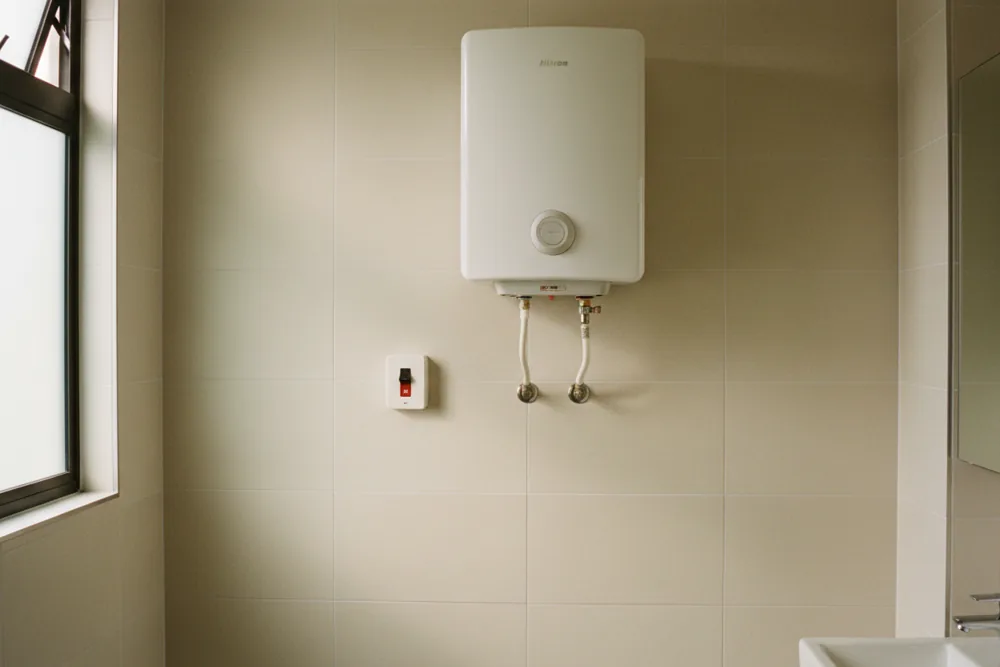 Circuit
Water Heater Circuits
Heater points and 20A isolators. The dedicated circuit is usually the cost, not the heater connection itself.
Read more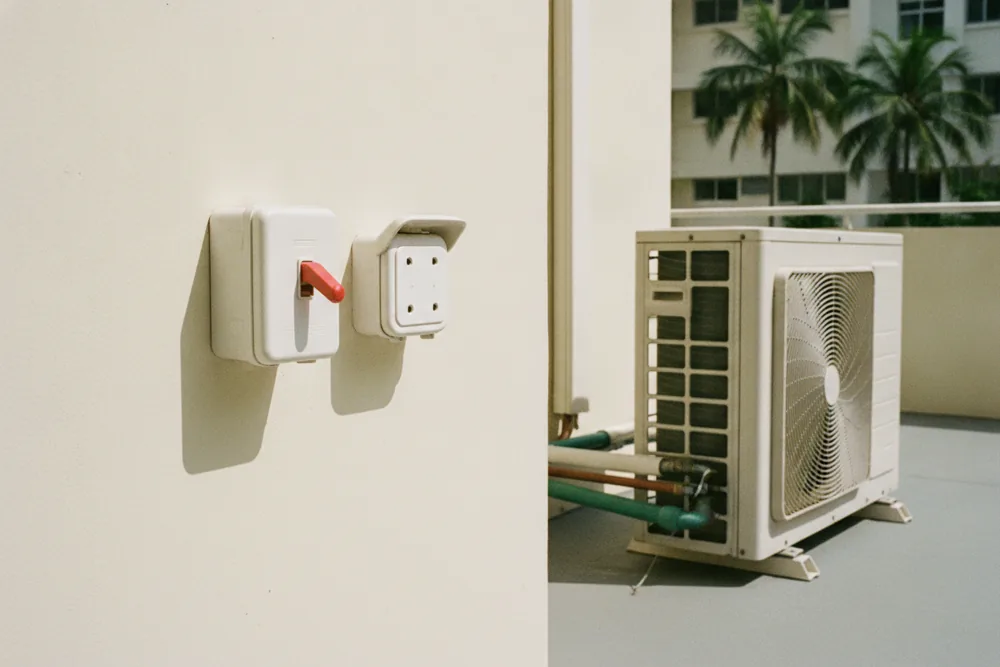 Aircon
Aircon Points & Isolators
15A points are the usual HDB permit trigger in a flat without higher loading, a timing cost as much as a money one.
Read more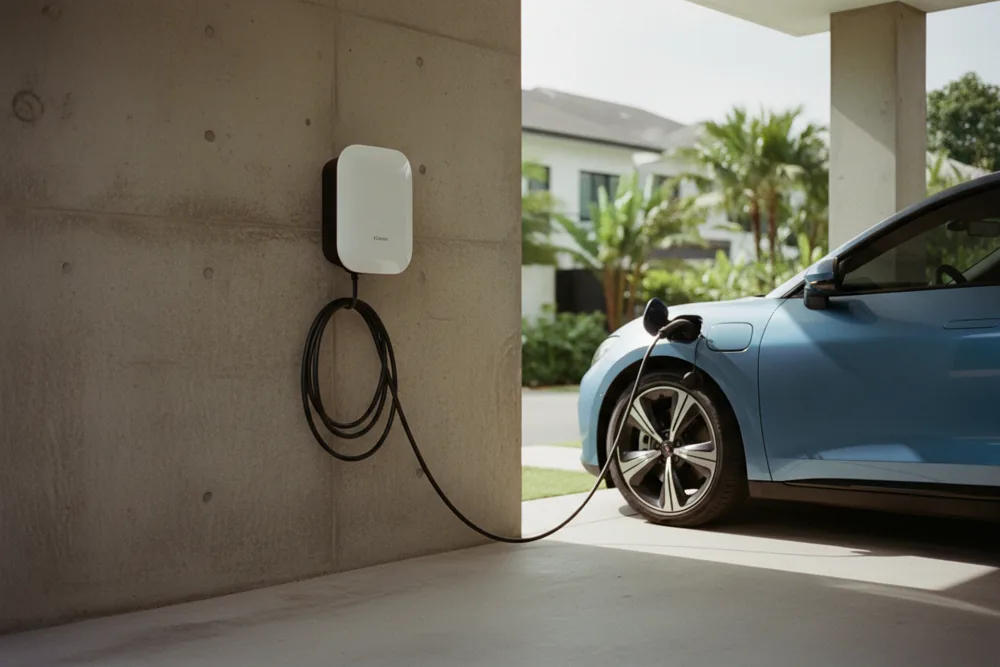 EV
EV
EV Charger Installation
Unit and installation quoted separately, with supply capacity and cable run distance moving the number more than brand does.
Read moreFees that are not the electrician’s
EMA statutory fees
The electrical installation licence fee applies to non-domestic premises only, homes need no installation licence at all.
S$100: electrical installation licence, 12 months. S$50, 3 months.
S$150: supply installation licence, 12 months. S$50, 3 months.
S$21.40 including GST, replacement licence. See the electrical installation licence regime.
What the LEW charges
Separate, and not fixed. EMA states plainly that it does not regulate what LEWs charge for their services, because the work varies case to case and they operate competitively.
Which is precisely why no regulated electrician tariff exists in Singapore, why every price list disagrees, and why EMA’s own advice is to obtain quotations from more than one LEW before appointing.
The largest single variable
Published surcharges are modest, around S$30 for an urgent slot. Real after-hours pricing moves much further, with reported spreads of roughly 1.6x to 2.7x between a midnight quote and a next-morning one on the same job.
Where it is safe to isolate the affected circuit and repair in daylight, that is a legitimate way to pay the daytime rate. Where it is not: burning smell, heat, no lighting at all, urgent after-hours electrical help is what the premium buys.
Concealed work costs more than the cable
Surface-mounted work is quick. Concealed work means chasing, conduit, and then making good: patching, skimming, repainting, which follows the electrical work as a separate stage.
Making good is frequently excluded from a quote and rarely noticed until the end. It is one of the four questions worth forcing every quote to answer.
Parts quality, and what the scope quietly assumes
Published figures themselves note brand upgrades adding roughly S$20–40 on a socket. On a distribution board the difference between a bottom-of-range RCCB and a reputable one is larger, and it matters more.
Scope assumptions do the rest: an existing accessible point versus a new run, one circuit versus several, a board with spare ways versus one without.
The after-hours premium, with real numbers
Worth stating with attribution rather than as a vague warning. In a HardwareZone thread on a midnight breaker quote, a homeowner in a five-year-old flat paid S$120 for a midnight inspection and was quoted S$900 to replace burnt circuit-breaker components at around 1am. Next-morning quotes: S$50 to inspect, S$550 maximum for the same replacement.
The honest reading is not that after-hours pricing is a scam. One contributor to that thread defended it on the grounds that changing electrical parts at midnight carries real risk, and unsocial hours plus a single-visit callout are genuine costs.
The defensible position is simply to decide consciously: get the quote in writing before work starts, and where isolating tonight and repairing tomorrow is safe, treat that as a real option rather than a failure of nerve.
Why a stale price guide is worse than none
Among the pages ranking on this exact search is a Singapore electrician price list dated 17 August 2021. Five years old, still on page one, still being read as current by anyone who does not check the byline.
Prices have moved since. Some of the providers listed have changed their rates, their scope, or their existence. A price guide that does not tell you when it was written is not a price guide; it is a screenshot of an unknown moment.
Which is why every figure here is stamped 18 August 2026, and why this page will carry a new date when it is re-verified rather than quietly having its numbers edited. If you are reading it long after that date, treat the bands as directional and check the linked sources.
Expect a call-out plus a job price, and ask if they merge
Published bands: call-out S$40–80, socket replacement S$60–120. The question that decides your actual bill is whether the call-out is absorbed when the work proceeds.
A good quote states both numbers and how they interact, before anyone is dispatched.
Expect diagnosis to be priced separately, and insist it happens
A tripping breaker is a diagnosis job before it is a parts job. A quote that goes straight to replacing the breaker is quoting for a symptom.
See diagnosing the fault first. Published DB work runs S$320–800, but a good share of these end without any part being replaced at all.
Expect a point count, a per-point rate, and a board decision
Published packages start around S$1,999 for a 3-room; designer estimates for larger and resale properties run to S$5,500. The gap between them is mostly point count.
A good rewiring quote states the assumed point count as a number, the rate per point beyond it, whether the distribution board is included, and whether making good is in.
How to make two quotes comparable
Four questions. They take a minute and they are worth more than any amount of negotiating on the headline figure.
Is diagnosis included or billed separately? Is the call-out absorbed if the work proceeds? What point count does this assume, and what is the rate beyond it? Is making good in or out?
Compare electrician quotes on those four points, request an itemised quote if you are given a single lump figure, and the spread usually collapses to something explainable. If one provider will not answer them, that is itself the answer, see comparing electricians beyond price.
Why licensed work is not the lowest number
Worth being direct about, because price pages invite a race to the bottom.
Using an EMA Licensed Electrical Worker is not a premium tier you are being upsold, it is the legal requirement for electrical installation work in Singapore, for a socket as much as for a switchboard. A quote that undercuts the published bands substantially is worth understanding before it is accepted.
What the licensed price covers that an informal one does not: testing and certification as real work rather than an afterthought, accountability that survives the job, and recourse if something fails. Unlicensed electrical work also sits badly with insurers and with a future buyer’s surveyor. You can verify anyone free, run a licence check before paying a deposit.
What a good quote includes
We publish no rate card of our own, for the reason given below. Whoever takes the job, these are the four things to ask for.
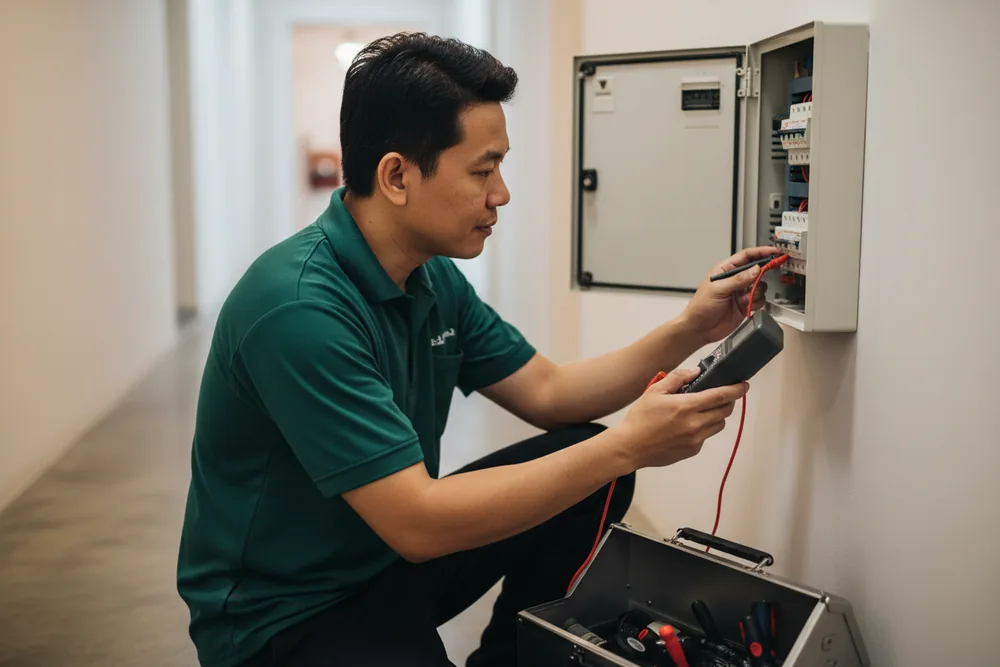 Step 1
Diagnosis before parts
Ask for the circuit and the cause to be established first. Nothing replaced to find out whether replacing it helps.
Read more Step 2
Written quote before work
Separating labour, materials, testing, statutory fees and GST, and whether the call-out merges into the job.
Read more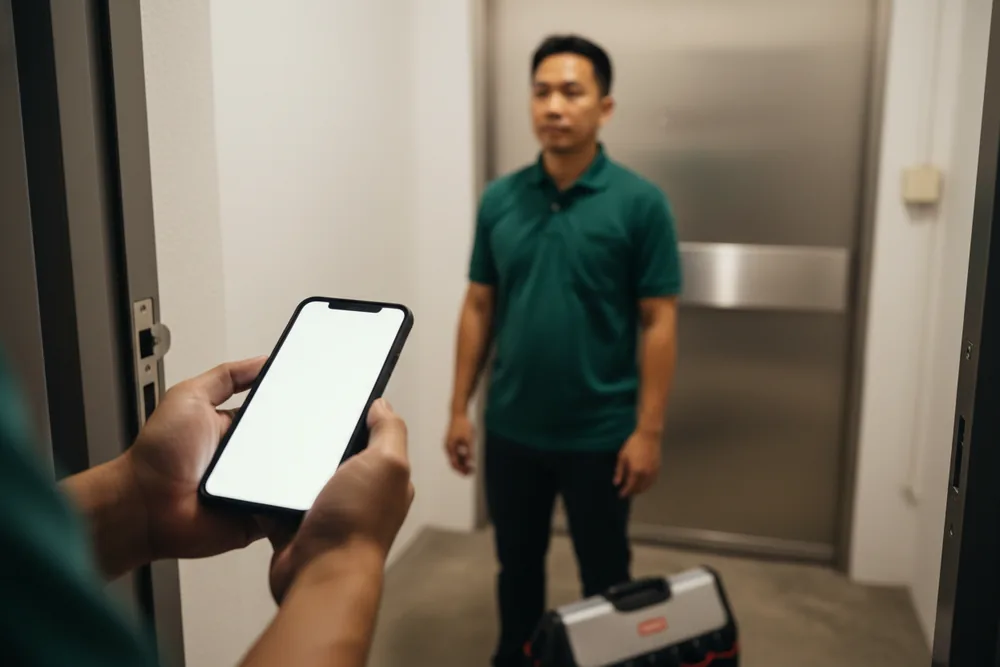 Step 3
A licensed worker, verifiable
Named Licensed Electrical Worker, checkable on ELISE before entry.
Read more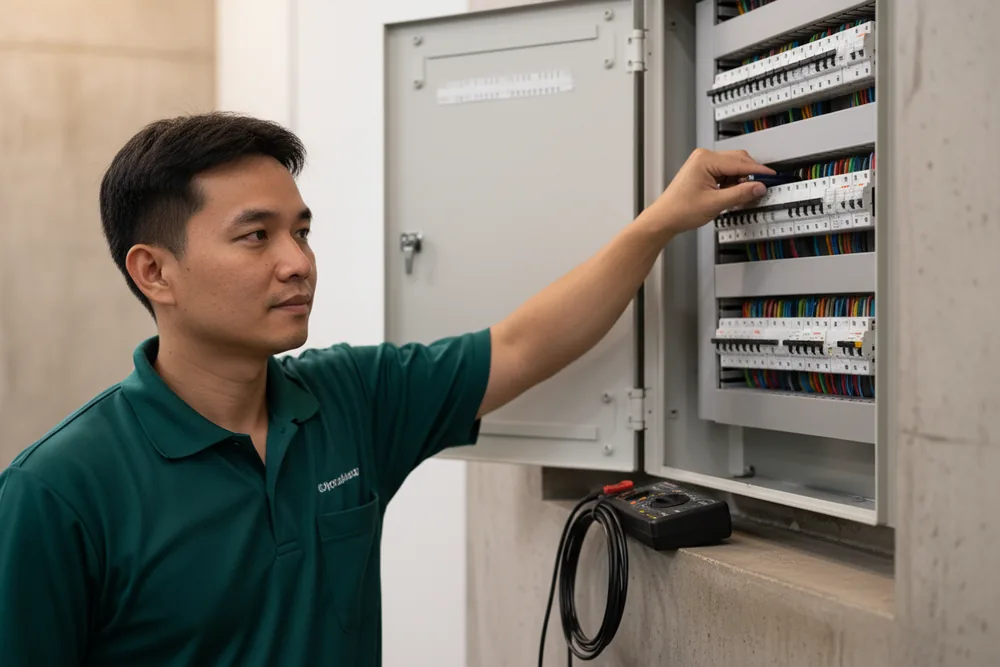 Step 4
Tested and labelled at handover
Ask for test results, a labelled board, and a written note of what the fault actually was.
Read moreWhat we do not claim
We publish no rate card of our own. No tenant electrician is signed to this site yet, so we have no rates to quote and inventing some would make this page exactly the thing it is criticising.
Every figure above is a third-party published range, with its source and collection date named. Where sources disagree, both appear. Where a figure comes from community reporting rather than a rate card, it is labelled as such.
A good electrician will tell you when the market range does not apply to your job. Bands describe typical work; they are not a promise about an atypical property.
Electrician pricing FAQs
How much do electricians charge in Singapore?
Across the published Singapore sources we collected on 18 August 2026, an ordinary-hours call-out or minimum charge runs roughly S$40–80, most small jobs land between S$60 and S$220, distribution board work runs from about S$320 into the low thousands, and whole-flat rewiring runs from roughly S$1,500 to S$5,500 depending on flat type and scope. Those are published market ranges from named third parties, not our rates. Every figure on this page carries its source and the date it was collected, because a price guide without both is guesswork.
What is the average hourly rate for electricians in Singapore?
There generally is not one, and that is the honest answer to a question Google asks twice on this search. Singapore electrical work is overwhelmingly quoted per job or per point rather than per hour: a socket replacement, a light point, a DB box. What functions like an hourly minimum is the call-out or transport charge, published between S$40 and S$80 across sources, with one provider listing a S$50 minimum transport allowance. If someone quotes you an hourly rate, ask what the minimum billing period is, because that is where the real number hides.
Is the call-out fee waived if I go ahead with the repair?
Sometimes, and it is entirely provider-specific. Some firms absorb the call-out into the job when work proceeds; others charge it regardless. Published 2026 pricing also shows charges that sit on top of the headline figure, around S$10 per visit as a fuel surcharge and roughly S$30 for an urgent or customer-requested time slot. This single question is worth asking in writing before anyone is dispatched, because it is the most common source of a bill that feels larger than the quote.
How much does it cost to install a power point or a light point?
Published 2026 Singapore ranges put a 13A double socket replacement at S$60–120, with brand upgrades adding roughly S$20–40, and a new power point on surface trunking at S$120–220. A single 13A point on a suitable existing circuit starts from about S$80. Light points run S$80–180 each in one 2026 source and S$40–150 in a 2025 source, and ceiling fan installation on existing wiring runs S$80–220. One provider publishes an electrical point from S$40 and a DC lighting point from S$25, which shows how much the low end depends on what is already in place.
How much does it cost to replace a circuit breaker or DB box?
Published cost guides put DB box repair or replacement at S$320–800 for a typical HDB or condo, with larger DB and rewiring works from S$1,000 upward. One provider page lists S$200–400 per replacement. Community reporting shows how far outside those bands after-hours quotes can sit: S$900 quoted at around 1am for burnt circuit-breaker components, against up to S$550 for the same work the next morning. If you are being quoted well above the published band, the hour of day is usually the reason, and it is worth knowing that before you agree.
How much to rewire a 5 room HDB flat?
Advertised renovation packages currently list around S$2,999 for a 5-room flat, but treat that as a floor rather than a total. Interior-design estimates published by Qanvast put a 4-room BTO at S$2,500–3,500 and a 4-room resale flat at S$3,500–4,500, and a separate 2026 guide puts complete electrical work for a 5-room or executive flat above the S$3,000–5,500 band it gives for a 4-room. The important caveat is the package trap: a designer quoted by Qanvast states that a package typically covers about 75% of the final electrical cost.
Why is my final bill higher than the quoted package price?
Usually because the package was priced on a minimum number of points and the real count was made on site. A Singapore designer quoted by Qanvast puts a typical package at about 75% of the overall electrical rewiring cost, with the remainder arriving as a variation order. Other common causes are making good: patching and repainting after concealed work: being excluded, and parts upgrades. None of these is necessarily improper, but all of them are avoidable surprises if you ask for the assumed point count, the per-point rate beyond it, and whether making good is included, before signing.
Do I have to pay government fees as well?
Only for non-domestic premises. Homes do not need an electrical installation licence at all. If you run business premises with an approved load above 45kVA, EMA’s published fees are S$100 for a 12-month electrical installation licence, S$50 for 3 months, S$150 for a 12-month supply installation licence and S$21.40 including GST for a replacement licence. Those are statutory fees paid to the regulator and entirely separate from what your Licensed Electrical Worker charges for the inspection and application, EMA explicitly does not regulate that.
Should I just take the lowest quote?
Not without checking that the quotes describe the same job. The four things that most often differ are whether diagnosis is included or billed separately, whether the call-out is absorbed when work proceeds, how many points a rewiring price assumes, and whether making good is in or out. Make every quote state those four and the spread usually collapses. And check that the person quoting holds a current EMA licence: you can verify any Licensed Electrical Worker free on the ELISE register, and unlicensed work leaves you with no recourse at all.
Citations
Sources for every figure on this page
Every figure on this page is a published third-party range, not our rate. Each source below names what it is cited for. Collected and last reconciled 18 August 2026.
-
Socket, light point, ceiling fan and fuel-surcharge ranges, and the urgent-slot premium.
-
DB box repair and replacement ranges quoted on this page.
HomeJourney: 2026 DB box repair and upgrade cost guide , January 2026
-
Rewiring estimates by flat type, and the 75 per cent variation figure.
Qanvast: homeowner’s guide to electrical wiring costs , May 2025
-
Community reporting of an after-hours breaker quote, cited as reported experience.
HardwareZone forum thread: overcharged for a midnight breaker replacement , January 2023
-
Statutory electrical and supply installation licence requirements.
EMA: electrical and supply installation licences , checked 21 August 2026
-
That electrical installation work is restricted to a Licensed Electrical Worker.
EMA: engaging licensed electrical workers , checked 21 August 2026
Published prices move. If a figure here no longer matches the source, the source wins, tell us and it gets corrected rather than quietly left to rot.
Related guides
Blog
Call-out fees and minimum charges
What the charge covers, and when it gets waived.
Read more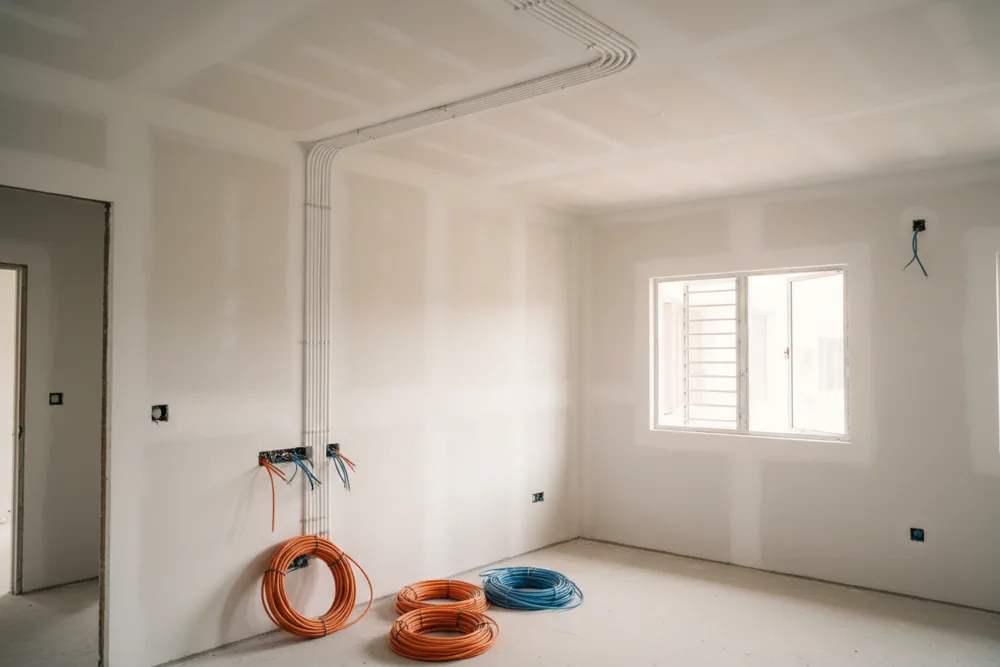 Service
Rewiring Singapore
The full sourced cost comparison and the 75% variation-order problem.
Read more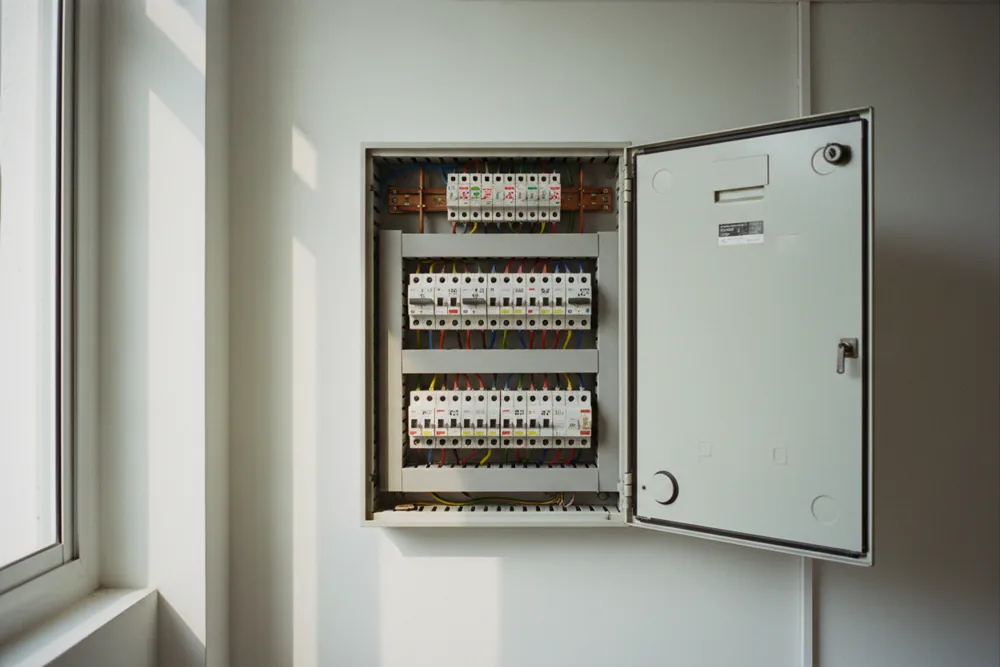 Service
Circuit breakers and DB boxes
What the work involves, and why a tripping breaker is rarely the faulty part.
Read more Blog
Blog
How to choose an electrician
What to ask before you book, beyond the number.
Read moreTell us the job and request an electrician
A band is a starting point, not an electrician quote Singapore homeowners can act on. Request an electrician Singapore-wide by telling us what needs doing, your property type and area, and how urgent it is. We pass it to the electrician who takes the job: ask them for a written quote that separates labour, materials, testing, statutory fees and GST.
Loading… if the form does not appear, contact us there instead.
If you see smoke or fire, call SCDF at 995 before anything else.
Island-wide
HDB, condo, landed and business premises
No rate card
We publish sourced market ranges, not prices of our own
Check on ELISE
Ask the electrician attending for their name and check their EMA licence
Just researching? Take the ranges and go, that is what they are for
Or request an electrician when readyLast updated