Verification · Singapore
How to Check an Electrical Installation Licence in Singapore
It takes about a minute, it is free, and it needs no account. Ask for the name and licence number of the individual doing the work, then search EMA’s public register. The part nobody explains: and the reason this page exists: is what to type, how to read what comes back, and what to do when nothing does.
- Free public register
- Takes about a minute
- Works at 2am, before you open the door
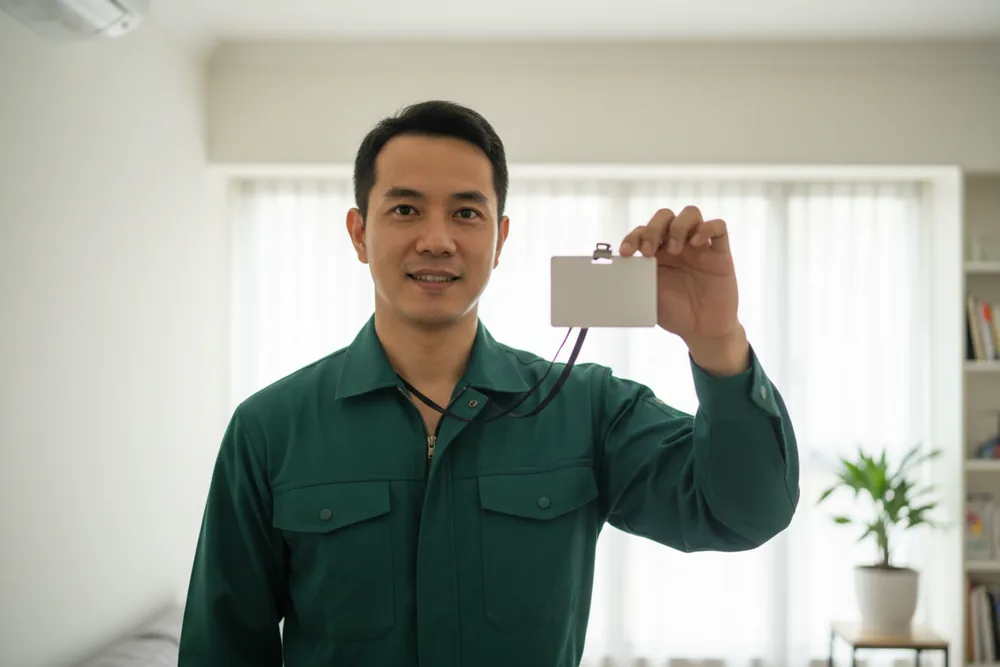
How to check if an electrician is licensed in Singapore: the three-step check
One: Ask for the name and licence number. Not the company name, the full name of the Licensed Electrical Worker who will carry out or supervise the work, and their licence number. A single message does it: "Before we book, could you give me the name and licence number of the LEW who will be responsible for the work?"
Two: Search the ELISE register. To verify a licensed electrical worker, open EMA’s ELISE search for licensed workers and use the "Search for Licensed Workers" function, by name or by licence number. EMA’s own guidance says the same thing, see EMA’s FAQ on searching for or verifying a Licensed Electrical Worker. No account, no fee, no waiting.
Three: Match the individual to the job. Confirm the record is the person you were given and that the licence is current. For a flat or a house, class is not something you need to agonise over, the section below explains why.
How to read what comes back
A good result
A record that matches the name you were given, not a similar name or a different person at the same firm.
A licence that is current rather than expired.
A class appropriate to the work: for a home, Licensed Electrician is entirely sufficient.
The same name appearing on your quote and your invoice afterwards. Consistency across the paperwork is the whole point.
A result that needs another question
Nothing found. Usually a spelling difference or a company name searched by mistake, see below before drawing conclusions.
A different person from the one attending. On larger jobs the LEW taking responsibility may supervise rather than attend, which is normal; you should still be told both names.
The firm will not give a number at all. That is the finding, and it is the reason to do this before anyone starts rather than after.
An expired record. Ask directly rather than assuming the worst; licences are renewed, and registers can lag.
If the search returns nothing
This is the moment where every other page on this subject goes quiet, and it is precisely when a consumer needs guidance. Do not conclude fraud, and do not proceed either.
Three ordinary explanations first. The name may be spelled differently in the register than in a WhatsApp message. You may have searched the trading name rather than the individual. Or you may have been given the name of the technician attending rather than of the Licensed Electrical Worker responsible, on larger jobs those genuinely differ.
So ask once more, specifically: the LEW’s full name as registered, and their licence number. Then search again. If that still returns nothing, or if a straightforward question is met with irritation rather than an answer, you have learned what you needed to learn. Nobody legitimate is offended by being asked.
"EMA licensed electrician" versus Licensed Electrical Worker
Google asks this on this search, and it is the question underneath all the others, because the terminology is what makes the check hard to perform.
"EMA licensed electrician Singapore" is a marketing phrase. Companies use it in their advertising, and using it does not make anyone dishonest: but it is not a credential, because there is nothing to look up.
"Licensed Electrical Worker" is the regulatory category, issued to a person by the Energy Market Authority. "Licensed Electrician" is one class within it, the first of three. So all three phrases point at broadly the same world, but only one of them corresponds to a record you can search.
The practical translation: when a firm says it employs EMA licensed electricians, that may well be true. Ask which one is doing your job. More on what the licence actually permits in what a Licensed Electrical Worker is licensed to do.
45kVA
Approved load limit for a Licensed Electrician, 1,000V and below: EMA handbook, Table 1
150 / 500kVA
Licensed Electrical Technician: design and operation limits, 1,000V and below
No limit
Licensed Electrical Engineer, subject to licence conditions
The three classes, and which one your job needs
EMA’s handbook sets the classes out by approved load and voltage level. A Licensed Electrician covers approved load not exceeding 45kVA at 1,000V and below. A Licensed Electrical Technician covers not exceeding 150kVA for design and 500kVA for operation, also at 1,000V and below. A Licensed Electrical Engineer has no load limit, subject to licence conditions.
Now the number that puts it in perspective. EMA notes that 45kVA is equivalent to 63A three-phase at 400 volts. An HDB flat is single-phase and sits far below that; so does a condominium unit; so does most of a landed house.
Which leads to a point worth making plainly, because it protects you from being sold something: class is a commercial and industrial question, not a domestic one. Anyone implying your flat needs a Licensed Electrical Engineer is over-specifying. Where class does start to matter is commercial and industrial electrical work, where approved load and the electrical installation licence regime both come into play, and where installations used exclusively for domestic purposes are exempt from that licence altogether.
That is the threshold to keep in mind when wiring an office or a shop unit, where the licence sits on the installation as well as on the worker.
Does an electrician need a license in Singapore?
For electrical installation work, yes, and EMA says so on the register page itself: all electrical work must be undertaken or carried out by a licensed electrical worker, with new wiring, rewiring and extensions given as examples.
What is restricted work: anything inside the distribution board, any change to fixed wiring, and the connection of fixed appliances, water heaters, ceiling fans, light fittings, socket outlets, EV chargers. Buying the parts yourself does not move that line.
Chargers are the clearest case: a charger bought online still needs a licensed installer, and the steps for a private wallbox at a landed home add registration on top of the wiring.
What is not restricted: plugging appliances in, switching things off, isolating a circuit you have identified, and resetting a device that has tripped, from outside the board. That is a useful boundary to know exactly, because it is the difference between a householder being sensible , as in diagnosing a power trip, and a householder breaking the law.
It is a person, not a company
If you take one thing from this page, take this. Companies are not licensed to do electrical work in Singapore. Individuals are.
A firm demonstrates its legitimacy by employing or engaging Licensed Electrical Workers, and the work on your property is carried out or supervised by a specific, named one of them. That reframes the entire exercise: "are they a licensed company?" has no checkable answer, while "who is the LEW responsible for my job, and what is their number?" has one, in about a minute.
It also explains why a subcontracting arrangement is not automatically suspicious. A firm that engages a LEW properly for the licensed portion of a job is doing the normal thing. What matters is that somebody is named and that the name checks out.
Handyman branding does not change the law
Worth saying without insinuation, because handyman brands rank prominently for electrical searches in Singapore and many of them operate perfectly properly.
The restriction attaches to the work, not to the job title. A handyman service that engages a Licensed Electrical Worker for the electrical portion of a job is doing exactly what the rules contemplate. The question is simply which licensed individual, and what is their number.
The answer that should end the conversation is not "we are a handyman company": it is any version of "electrical work is simple, it does not need a licence". That is the one response that tells you everything. More on choosing between the options in a fuller guide to picking an electrician.
Requesting an electrician? Ask for the name and licence number of the worker attending
Request an electrician"HDB-approved electrical contractors" is two different things
People search for HDB approved electrical contractors, and this question appears on this search as well as on the rewiring one, which suggests the confusion is widespread and durable.
HDB maintains a directory of renovation contractors. That is about the renovation relationship inside a flat: permits, deposits, conduct in the block, and it is governed by HDB renovation guidelines for electrical works.
The electrical licence is EMA’s, held by individuals, checkable on ELISE. Being listed as a renovation contractor does not make a firm licensed for electrical work, and holding a LEW licence does not put anyone in a renovation directory. Two systems, two questions, and searching for an HDB licensed electrician Singapore register will not resolve either of them, the register you want is EMA’s. More at whether HDB keeps an approved list and hiring an electrician for an HDB flat.
Anybody can be trained to install, but if you can troubleshoot you're going to be very valuable.
Yes, even then, especially then
The register works at any hour and the check takes about a minute, which is less time than it takes someone to reach your block. Ask for the name and number when you book, not when they are at the door.
Out-of-hours is also when pricing pressure is highest, so it is the moment when knowing who you are dealing with matters most, see how out-of-hours call-out fees are set and requesting an emergency electrician.
Check before the deposit, not after
On a renovation the electrical work is usually a subcontracted portion of a larger package, so ask your main contractor or designer to name the Licensed Electrical Worker taking responsibility for it.
It is a reasonable question at quotation stage and an awkward one after a deposit. Relevant on full HDB flat rewiring jobs, where the licensed portion is substantial.
A socket is still restricted work
Small jobs are where checking gets skipped, and they are still licensed work: a socket outlet, a light fitting, a ceiling fan connection or a breaker or DB box repair visit all involve fixed wiring.
The size of the job does not change the rule, and a minute is a minute.
Red flags, and things that are not red flags
Worth a second thought
Refusing to give a licence number, or treating the question as an insult.
A company name offered in place of a person, repeatedly, after you have asked for the individual.
No written scope before work starts, particularly on anything involving the board.
Pressure to decide immediately at an unsocial hour, or a quote that changes once the old part is off the wall.
"Electrical work is simple, it does not need a licence." The one answer that settles it.
Perfectly normal
A subcontracted Licensed Electrical Worker. Normal, provided they are named.
A handyman or renovation brand that can tell you which LEW is responsible.
The LEW supervising rather than attending on a larger job, that is what supervision means in the rules.
A recently issued licence. Everyone’s licence was new once; it says nothing about the work.
Being asked for photos and details before a price. That is scoping, and it is what produces a quote that survives contact with your flat.
What to ask for in writing before work starts
Six things, and none of them is unreasonable to request by message before a booking is confirmed.
One, the name and licence number of the Licensed Electrical Worker responsible. Two, the scope, what is being done, and to which circuits. Three, whether testing is included and which tests.
Four, whether making good is included and by whom. Five, the permit position if the property is an HDB flat and the scope touches renovation works. Six, the total, including any call-out or minimum charge, published Singapore ranges are on our third-party price data page.
What you should hold afterwards
The check before the work is worth little if nothing records that it happened.
Test results: insulation resistance, earth continuity and RCCB operation as applicable. The licence number on the paperwork, so the quote, the invoice and the register all agree. A labelled board where the work touched it. A record of what was installed where, which is worth more than it sounds the first time somebody drills a wall.
This matters beyond the day. It matters when a buyer’s solicitor asks about renovations, when something goes wrong and a question of responsibility arises, and when the next electrician has to decide whether to trust what is behind your wall, as they will on tripping problems in HDB flats or any repeat visit.
The same check applies to a request made here
A page telling you to verify electricians would be worth very little if it exempted jobs requested through this site.
When an electrician takes your job, ask for the name and licence number of the Licensed Electrical Worker who will attend, before you confirm, and run exactly the process described above. If the answer is vague, apply your own red-flag list.
What we do not claim
We do not describe what a licence card looks like. Other pages do; we have not verified the format against an EMA source, an electrician licence is a record rather than an object, and the check that actually matters is the register rather than a laminated card.
We do not publish worker-licence fees, renewal periods or application steps. This page is for people hiring an electrician, not for people becoming one, and mixing the two is how misinformation spreads.
We do not claim there is a downloadable list of every Licensed Electrical Worker. People search for one; what exists is a search function, and we would rather point you at the real thing than describe a directory we have not seen.
Checking an electrician’s licence: FAQs
How do I check if an electrician is licensed in Singapore?
Ask for the name and licence number of the individual who will carry out or supervise the work, then search EMA’s e-Licence Information Services register, ELISE, under "Search for Licensed Workers". It is public, free, needs no account, and takes about a minute. EMA’s own FAQ on verifying a Licensed Electrical Worker says exactly this, and the ELISE worker-search page is currently the top result on Google for this question. The important detail most people miss is that you are checking a person, not a business: search the individual’s name or licence number, not the company on the invoice.
What is the difference between an "EMA licensed electrician" and a Licensed Electrical Worker?
Google asks this on this search, and the answer clears up most of the confusion around hiring. "EMA licensed electrician" is a marketing phrase used by companies in their advertising. Licensed Electrical Worker, or LEW, is the actual regulatory category, the licence EMA issues to an individual. Within that category there are classes, and "Licensed Electrician" is the first of them, alongside Licensed Electrical Technician and Licensed Electrical Engineer. So a firm advertising an EMA licensed electrician may be entirely legitimate; the phrase simply is not itself a credential you can verify. What you can verify is a named individual with a licence number.
Which licence class do I need for my job?
For anything domestic, the first class covers it comfortably. EMA’s classes run: Licensed Electrician for approved load not exceeding 45kVA at 1,000V and below; Licensed Electrical Technician for not exceeding 150kVA for design and 500kVA for operation, also at 1,000V and below; and Licensed Electrical Engineer with no load limit, subject to licence conditions. To put 45kVA in perspective, EMA notes it is equivalent to 63A three-phase at 400 volts, far beyond an HDB flat or a condominium unit. Class becomes a real question for commercial and industrial premises, not for a home, and anyone implying your flat needs an engineer is over-specifying.
Does an electrician need a licence in Singapore?
For electrical installation work, yes. EMA states on the ELISE worker-search page itself that all electrical work must be undertaken or carried out by a licensed electrical worker, and gives new wiring, rewiring and extensions as examples. Practically that covers anything inside the distribution board, any change to fixed wiring, and the connection of fixed appliances such as water heaters, ceiling fans and light fittings. What is not restricted: plugging appliances in, switching things off, and resetting a device that has tripped from outside the board. That boundary is worth knowing precisely, because it is the line between a householder being sensible and a householder breaking the law.
I searched and nothing came back. What now?
Do not jump to a conclusion, but do not proceed either. Three ordinary explanations first: the name was spelled differently from the register, you searched a company name rather than the individual, or you were given the name of the person attending rather than the Licensed Electrical Worker taking responsibility for the work, on larger jobs those can differ. So go back and ask specifically for the LEW’s full name as registered and their licence number, and search again. If that still returns nothing, or if the question is met with irritation rather than an answer, that is your answer. Nobody legitimate is offended by being asked.
Is the licence held by the company or the person?
The person. This is the single most useful thing to understand about hiring an electrician in Singapore, and it reframes the whole exercise. Companies are not licensed to do electrical work; individuals are. A firm demonstrates its legitimacy by employing or engaging Licensed Electrical Workers, and the work is carried out or supervised by a named one of them. So "we are an EMA licensed company" is not a checkable claim, while "the LEW responsible for your job is [name], licence number [number]" is: in about a minute, on a public register.
Can a handyman legally do my electrical work?
The branding is not the question; the work is. Electrical installation work is restricted to a Licensed Electrical Worker regardless of what the business calls itself, and plenty of handyman firms handle this correctly by engaging one. What matters is whether a licensed individual is carrying out or supervising the work, and whether you can be told their name and number. If a handyman service answers that question straightforwardly, there is no issue. If the answer is that electrical work is simple and does not need one, that is a firm to walk away from.
Who are the HDB-approved electrical contractors in Singapore?
The phrase merges two separate systems, which is why the question keeps returning. HDB maintains a directory of renovation contractors, which is about the renovation relationship in a flat: permits, deposits, conduct in the block. The electrical licence belongs to EMA and is issued to individuals as Licensed Electrical Workers, verifiable on ELISE. Being in a renovation directory does not make a firm licensed for electrical work, and holding a LEW licence does not put anyone in a renovation directory. Check the licence on ELISE, and treat the renovation directory as a separate question about who is managing works in your block.
Does using an unlicensed electrician affect my insurance or my resale?
We are not insurers and will not pretend to speak for your policy, so treat this as a reason to keep paperwork rather than as legal advice. What is straightforwardly true: work carried out by a Licensed Electrical Worker comes with test results and an identifiable responsible person, and undocumented work does not. That difference shows up when something goes wrong and someone asks who did the work, when a buyer’s solicitor asks about renovations, and when the next electrician has to decide whether to trust what is behind your wall. Keeping the licence number, the test results and a labelled board costs nothing at the time and is very hard to reconstruct later.
Related guides
Service
What a LEW is licensed to do
The scope of the licence, and what it means for your job.
Read more Blog
Blog
How to choose an electrician
Beyond the licence: scope, quotes and what to compare.
Read more Blog
Blog
The HDB-approved electrician question
Why the list people are looking for is not the one that matters.
Read more Service
Published Singapore price ranges
What third-party sources publish, with every figure attributed.
Read moreRequest an electrician, then ask the same question
Tell us what the job is and we pass it to an electrician. Ask them for the name and licence number of the Licensed Electrical Worker who will attend, and run it through ELISE before you confirm anything. If an electrician will not give you that, you have your answer.
Loading… if the form does not appear, contact us there instead.
If you see smoke or fire, call SCDF at 995 before anything else.
Free and public
ELISE needs no account and takes about a minute
A person, not a firm
Licences are issued to individuals: search the name, not the company
Check every time
Ask the electrician who takes your job for their name and licence number
One minute on a free public register beats any badge on a website
Request an electricianCitations
Sources for every figure on this page
Every figure quoted above is a published third-party number, not an estimate of ours. Where sources disagree, both are shown. Collected and last reconciled 21 August 2026.
-
The worker search used in the licence-check walkthrough on this page.
ELISE: search for a licensed electrical worker , checked 21 August 2026
-
How to search for or verify a Licensed Electrical Worker, in the regulator’s own words.
EMA FAQ: how to search for or verify a Licensed Electrical Worker , checked 21 August 2026
-
Which electrical works in an HDB flat need approval, and the conditions attached.
HDB: renovation guidelines for electrical works , checked 21 August 2026
-
Electrician licence classes, and which class covers which scale of work.
EMA: electrician licence classes and conditions , checked 21 August 2026
Published prices move. If a figure here no longer matches the source, the source wins, tell us and it gets corrected rather than quietly left to rot.
Last updated