Electrical contracting · Singapore
Electrical Contractor Singapore
Homes, offices, shops and industrial units. What decides who can legally do your job is not a company badge: it is your approved load, which sets the class of Licensed Electrical Worker required and whether your premises needs an electrical installation licence at all. This page explains both, with EMA’s own figures, then why a commercial quote should follow a site survey rather than a price list.
- Ask for the LEW name and check ELISE
- Licence class must match the load
- Ask for a written scope first
Commercial job types, and who each suits
The same need arrives under several search names: commercial electrician Singapore, electrical works contractor Singapore, licensed electrical contractor Singapore, or simply electrical contractor near me. The work behind them spans a single dead socket in a flat to a three-phase switchboard in a workshop. These are the routes people arrive here looking for.
Fit-out
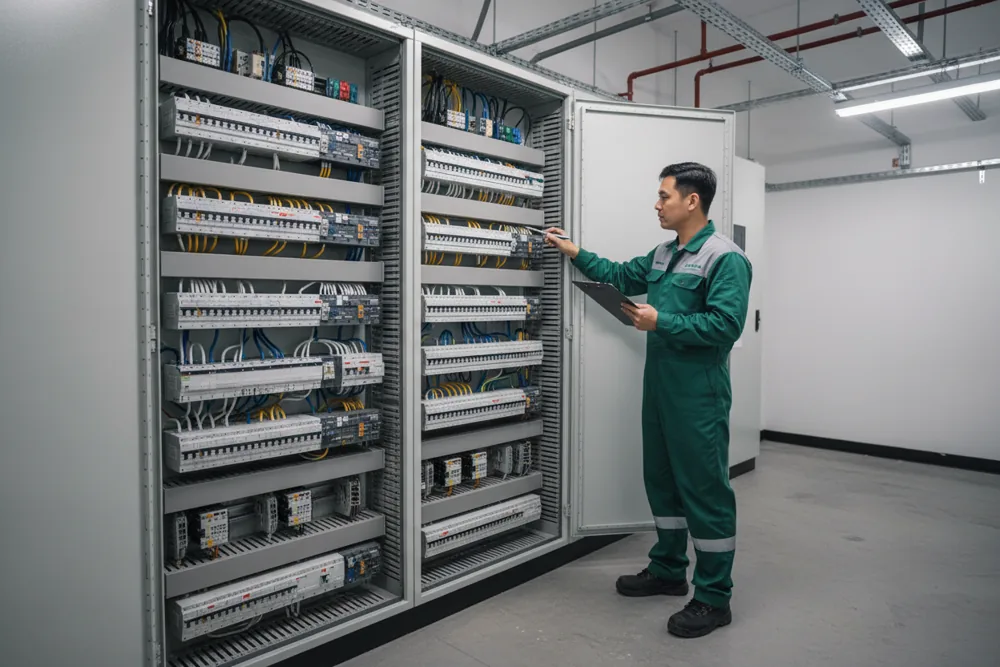
Office & Shop Fit-outs
DB sizing against the tenancy load, lighting and power circuits, data coordination, and the landlord sign-off that holds up handover.
Read more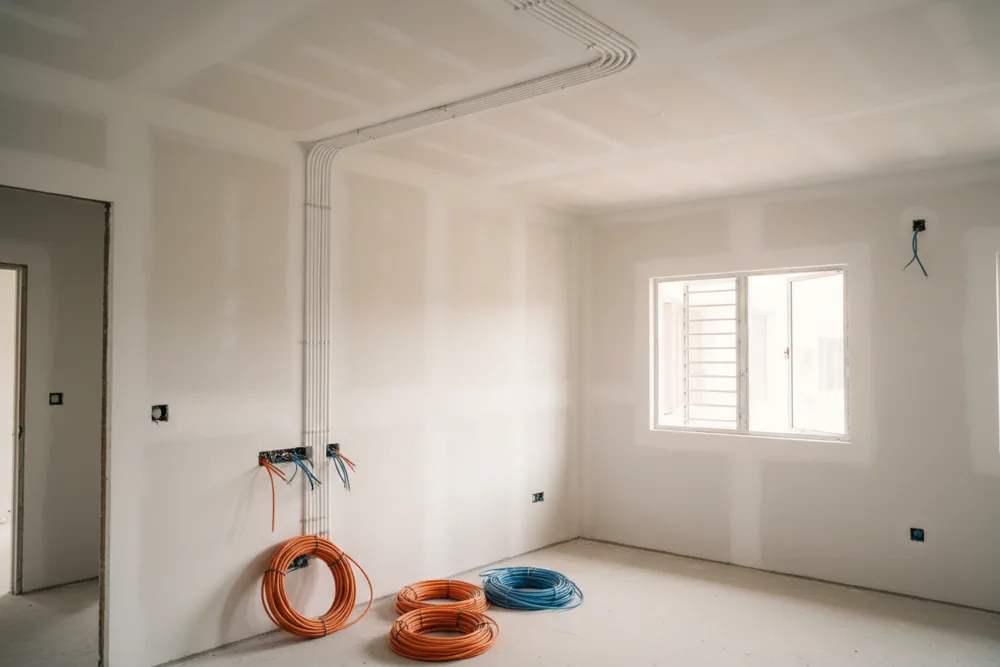 Service
Upgrades & Rewiring
Three-phase installations, distribution board upgrades and rewiring where the load has outgrown what the premises was built for.
Read more Repair
Faults & Troubleshooting
Nuisance tripping, dead circuits, heat at the board. Diagnosis first, so you are not paying to replace parts that were never the problem.
Read more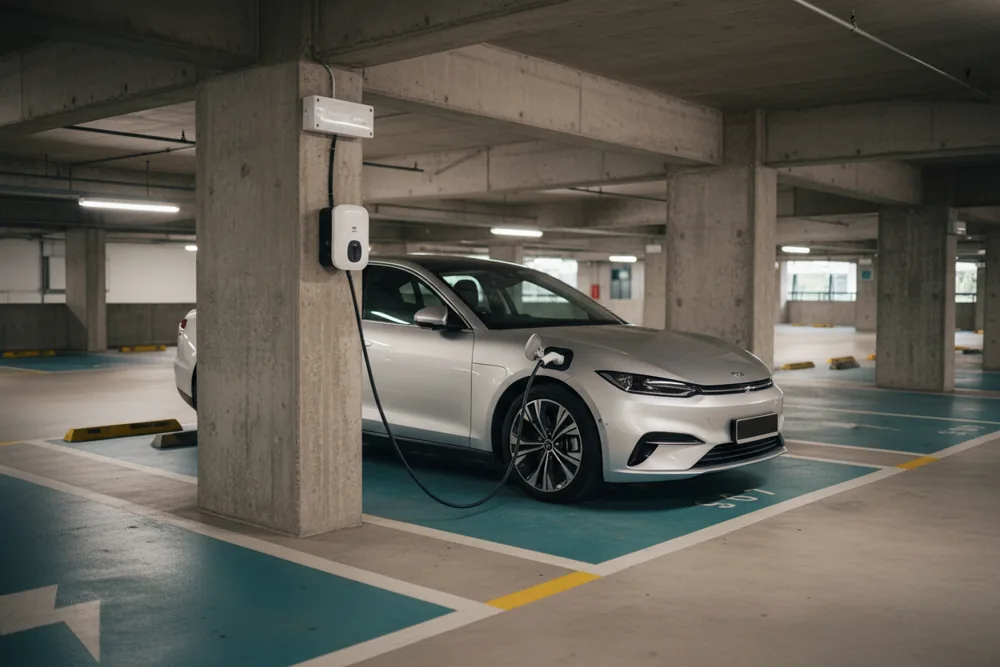 EV
EV
Charging Bays
Charging bays for staff and fleet vehicles, with load management so the chargers do not compete with the rest of the premises.
Read moreElectrical contractor vs electrician: the difference that matters
The contractor, the firm
Takes on the project and prices it. Programmes the work, orders materials, coordinates with your landlord or managing agent, and carries the commercial liability if the job runs long or goes wrong.
Can be a one-person outfit or a company with several crews. Nothing about being a “contractor” is licensed, which is exactly why the word gets used so loosely on this search result page.
This is who you engage for a fit-out, a maintenance contract, or anything with a programme and a payment schedule.
The LEW, the person
Holds the licence that legally permits electrical installation work. In Singapore that is a Licensed Electrical Worker, and the class of licence is tied to a load ceiling.
Signs off that the installation is safe to use, submits inspection reports, carries out switching operations, and approves new connections. On a licensed installation, one named LEW is appointed to it.
This is who actually stands behind the compliance. Ask any firm for the name, class and licence number, and check it on the register.
The three classes of Licensed Electrical Worker, and the load each can take
Where your job lands
Almost every commercial electrical job in Singapore is really settled by one number: the approved load of the installation, which is the total electrical load it is designed to handle.
That number decides which class of Licensed Electrical Worker is permitted to design and operate the installation. A firm that quotes you without establishing it is quoting blind, and this is the most common way a commercial installation ends up non-compliant.
It is worth knowing this before you take quotes, because it is a question you can ask that most buyers do not: which class of LEW does my load require, and does yours hold it?
EMA’s authorisation table
Licensed Electrician: approved load not exceeding 45kVA, at 1,000V and below.
Licensed Electrical Technician: not exceeding 150kVA for design and not exceeding 500kVA for operation, at 1,000V and below.
Licensed Electrical Engineer: no load limit, subject to licence conditions.
Reproduced from Table 1 of EMA’s Handbook for Application of Electrical Installation Licence, read 18 August 2026.
45kVA
Approved load above which a non-domestic installation must be licensed (EMA)
63A
What 45kVA works out to as a three-phase supply at 400 volts (EMA footnote)
S$100
EMA’s published fee for a 12-month electrical installation licence
45kVA: the number that decides whether your premises needs a licence
Separate from the worker licence, there is a licence attached to the premises. Not every premises needs one. Under EMA’s electrical and supply installation licensing rules, under electrical installation licence Singapore rules you may not use or operate the following without one:
All installations used in hazardous trades, regardless of load. EMA gives businesses dealing in highly flammable or explosive materials, and construction work activities, as examples.
All non-domestic electrical installations with an approved load exceeding 45kVA. EMA’s own footnote puts that in practical terms: 45kVA is equivalent to 63A three-phase at 400 volts. If you have a three-phase supply at your unit, the 45kVA threshold Singapore applies is a figure to check on your switchboard, not one to guess at.
All supply installations for non-domestic purposes, regardless of approved load. A supply installation is one where you run your own generators as the source of electricity for your own use.
Not one page ranking on the first result page for this search explains any of this. That is not a small omission, it is the difference between a compliant premises and a business operating something it is not licensed to operate.
Homes are exempt, business premises usually are not
If you arrived here about a flat or a condo unit, you can stop worrying about installation licences entirely. Electrical and supply installations used exclusively for domestic purposes are exempt from the licensing requirement. An HDB flat never needs one. A condo apartment never needs one.
What does not change is the work itself. Electrical installation work in a home is still legally restricted to a Licensed Electrical Worker, and no exemption from premises licensing turns it into a job you can do yourself or hand to an unlicensed handyman.
The part of a residential building that is licensed is the common property: the risers, communal lighting, socket-outlets and protective systems, which sits under the licence held by the MCST or the building owner, and which carries a six-monthly inspection requirement rather than an annual one.
If you rent your unit, read this before you apply for anything
This is the single most common wasted phone call in commercial electrical work: a tenant sets out to get an installation licence for a unit that is already covered by one.
Where a non-domestic building buys its electricity en bloc through the landlord or the MCST, there is only one contestable consumer for the entire building, so only one electrical installation licence is required and it covers your unit too. Tenants who already held their own licence before that arrangement began may keep renewing it, or may arrange to come under the landlord’s licence, which needs the landlord’s consent and lets the landlord’s appointed LEW inspect your installation.
There is also a hard gate on going it alone: EMA will not issue you a separate installation licence for your unit unless you hold your own electricity account with SP Services for it. If you are billed by your landlord rather than by SP, the question is settled before it starts.
One more thing worth extracting from your landlord early in a fit-out: a consent letter from the landlord’s LEW confirming the landlord’s installation can actually support the load your unit needs. It is a required supporting document, and it is far easier to obtain before you have committed to equipment.
You appoint. The LEW inspects, then applies.
You do not submit the application yourself. You appoint a LEW of the appropriate class and issue a Letter of Appointment, which you can download from the ELISE portal.
That LEW then inspects your installation to satisfy themselves it is safe to use or operate, the inspection comes before the application, not after, and submits the application to EMA on your behalf through ELISE, EMA’s licensing portal and public register.
On approval, the LEW prints the licence and delivers it to you. You cannot print it yourself.
The documents that hold applications up
A valid electricity account with SP Services for the premises being licensed. A single-line drawing, the plan showing the installation’s circuits. Supporting documents establishing who maintains the incoming service cable, you or your landlord.
Where applicable: the landlord’s LEW consent letter on load, a location plan if the premises has no official address yet, and technical details of any generators if it is a supply installation.
The single-line drawing is a common hold-up. Older premises often have one that no longer matches the switchboard in front of you.
Two to three working days, plus seven
EMA processes and approves the application within 2 to 3 working days if it is complete and in order. The appointed LEW then has 7 days from the approval notification to print and deliver the licence to you.
The regulator is not the bottleneck. The inspection and the paperwork in front of it are, which is why the realistic planning question is when your LEW can get to site, not how fast EMA moves.
What the licence costs, from the regulator and from the LEW
EMA’s published fees
Electrical installation licence, 12-month, S$100.
Electrical installation licence, 3-month, S$50.
Supply installation licence, 12-month, S$150. Three-month, S$50.
Replacement licence, S$21.40, inclusive of GST.
EMA’s published fee structure, read 18 August 2026. These are the regulator’s fees, not ours.
What the LEW charges
Separate, and not fixed. EMA states plainly that it does not regulate what LEWs charge for their services, because the work varies case to case and LEWs operate in a competitive environment.
EMA’s own advice is the advice we would give: obtain quotations from more than one LEW before deciding who to appoint.
What moves that number is the size and age of the installation, how much of the existing documentation is usable, and how much remedial work the inspection turns up before anything can be certified.
Not sure which side of 45kVA you are on?
Tell us about your premisesHow often your installation must be inspected
Inspection frequency electrical installation rules
Most licensed installations: annually, and the inspection has to happen before the licence is renewed.
Construction worksites, at least once a month.
Trade fairs, mini-fairs, festive lighting, daily.
Multi-tenanted buildings, condominiums, at least once every six months.
High voltage installations (6.6kV and above): a schedule worked out by the appointed LEW, but at least once a year.
Why it is not all annual
The reasoning EMA gives is worth repeating to anyone who treats the annual inspection as a formality: wiring, fittings and apparatus degenerate with time, and undetected defects endanger life, property and the part of the national grid your installation is connected to.
Worksites are inspected monthly because they take more wear and tear. Public-facing temporary installations are inspected daily because members of the public can touch them.
Independently confirmed in a 2022 parliamentary reply on the inspection regime, which also records the six-monthly requirement for HDB common areas.
What the licence holder is on the hook for
Getting the licence is not the end of it. As the holder, the obligations sit with you, not with your contractor, a distinction that matters when something is inspected and found wanting.
Appoint a LEW of the appropriate class and keep one appointed. Ensure the installation is maintained as your LEW recommends, and inform them before any modification is carried out. Ensure all electrical work is carried out only by a LEW.
Then the paperwork obligations, which are the ones most often missed: display the licence in the immediate vicinity of the main switchboard, together with a copy of the updated single-line drawing; keep a copy of each inspection report; and renew before the expiry date rather than after it.
One trap worth naming: the licence is non-transferable. If your company changes its name and the UEN changes with it, a new application is required, not an amendment. If the UEN is unchanged, the licensee name can be updated and a replacement licence issued. The statutory basis for all of this is the Electricity (Electrical Installations) Regulations.
What your appointed LEW is on the hook for
The other half of that relationship is worth setting out, because it is also the standard you should hold any firm or electrician to.
Your appointed LEW inspects and tests the installation and certifies that it is safe to use or operate, covering the entire installation from the incoming supply through to the fixed outlets. They gather the information needed for the application, submit it to EMA, and print and deliver the licence to you.
Ongoing, they submit inspection reports, maintenance reports and updated single-line drawings to EMA; carry out switching operations at your installation; assess and approve any new connection to it; recommend servicing when it is needed; and advise you on technical or licensing questions.
If the person named on your licence cannot tell you when the last inspection report went in, that is a signal.
Compared to all of the rest of the breakers around it, the handle just doesn't really feel like it's got any mechanical strength in the spring anymore.
Office and shop fit-outs
A fit-out is where load, landlord and programme collide. The electrical scope is rarely the largest line in a fit-out cost plan, but it is very often the one that decides whether handover happens on the date you promised your staff or your customers.
The work starts with sizing the distribution board against the load your tenancy will actually draw: not the load the previous tenant drew, which is what an existing board reflects. A café replacing a retail unit is the classic case: same floor area, a completely different load profile.
Office electrical installation work then runs to lighting and power circuits, coordination with data and mechanical trades so that nobody chases the same wall twice, and the landlord or managing agent sign-off, which is smoother when the documentation was prepared for it rather than assembled afterwards. Our office and shop fit-outs page goes through the sequence in more detail.
A kitchen load will usually push you over the threshold
Commercial kitchen equipment is where approved load climbs fastest: ovens, fryers, chillers, extraction, and a three-phase supply to carry them. It is entirely normal for an F&B unit to sit above 45kVA, which means the premises needs an electrical installation licence and the design sits with a Licensed Electrical Technician or above.
Do this first, before equipment is ordered: establish the intended load, confirm whether the landlord’s installation can support it, and get the consent letter. Kitchen equipment ordered against a load the building cannot deliver is an expensive way to learn this.
Probably nothing to apply for: check the building, not the unit
A small office in a managed building, with lighting, workstations and a split-system aircon, is unlikely to exceed 45kVA on its own. And if the building buys electricity en bloc, the building’s licence covers you regardless.
So the answer here is usually “no separate licence”, and the useful work is elsewhere: confirming there is spare capacity at the board for what you are adding, and that any modification is handed back to the building’s appointed LEW for operation and maintenance.
The board is the symptom, the load history is the problem
Older industrial units accumulate: a machine added here, a compressor there, a sub-board fed from a way that was never sized for it. What presents as nuisance tripping is usually a load story, and replacing the breaker treats the alarm rather than the fire.
Start with a survey against the actual single-line drawing, compare it to what is physically installed, and establish the real approved load before deciding between a board upgrade and a supply upgrade. The two have very different timelines.
If your load is going up, the supply application comes first
There is a sequencing mistake that costs commercial clients real money, and it is easy to avoid once you know the order.
Upgrading or downgrading your approved load is not something your contractor simply does on site. Your appointed LEW assesses the load required for your operation and then submits an application to SP Services to change the approved load of the installation. That is a lead time you do not control.
So: establish the load, apply for the supply change, and only then commit to equipment and to upgrading the distribution board. Doing it the other way round leaves you with plant on site and no supply to run it, which is the most avoidable delay in a fit-out programme.
Maintenance contracts: what is genuinely worth paying for
The statutory floor
The annual (or six-monthly, or monthly) inspection and the certification that lets you renew the licence. This is the legal minimum for a licensed installation, and it is not optional.
Be careful with any contract priced as if the statutory inspection were the whole service. It is the floor, not the offering.
What actually earns the fee
Switchboard checks and protective device testing between inspections, the things that fail quietly rather than dramatically.
A named contact who already knows your site, so a fault during trading hours does not begin with somebody reading your board for the first time.
Scope set against your actual load, equipment age and operating hours, which is exactly what EMA expects your appointed LEW to advise on after assessing your installation. An electrical maintenance contract Singapore businesses actually benefit from is priced against exactly that.
On site: what a survey actually looks at
No competitor page tells a commercial buyer what happens on the first visit, so here it is.
The main switchboard and the incoming supply, first, what the installation is actually fed with, and what protective devices sit at the head of it. Then the existing single-line drawing held against reality, because in an older premises those two things diverge more often than not.
Then spare ways and available capacity, which determines whether what you want is a circuit addition or a three-phase and rewiring conversation. And finally the practical constraints: access, working hours, and whether there is a shutdown window at all, because on a trading premises that frequently sets the programme more than the electrical work does.
Emergencies at business premises
If there are sparks, smoke, or any fire risk, that is SCDF on 995 before anything else. Nothing on this page displaces that.
Past that, the triage at a business premises differs from a home in one respect: the instinct is to restore everything at once, and the safer move is usually to isolate the affected circuit and keep the rest of the premises trading. Killing the main switch on a retail unit turns an electrical fault into a closed shop.
Where downtime is costing money by the hour, tell us how urgent it is through the emergency electrician request page. For a supply fault on SP's side, call SP Group on 1800 778 8888.
What published market rates look like
Published Singapore ranges
Ordinary-hours call-out or minimum charge, roughly S$70–80, per Singapore forum reporting.
Distribution board repair or replacement, typical HDB or condo, S$320–800, per a published 2026 Singapore cost guide.
Larger DB works and full rewiring, S$1,000 and up, same source.
These are published market ranges collected from third-party Singapore sources, not our rates. More in our third-party price benchmarks.
Why commercial work is not on a price list
Because the honest answer for a commercial scope is that it is quoted from a survey. A figure given over the phone for a premises nobody has seen is a number designed to win a call, not to survive one.
What to ask for before a survey: what the survey covers, what it costs, and a written quote that separates labour, materials, testing, statutory fees and GST.
Why quotes for the same commercial job differ so much
A three-way spread on the same scope reads like somebody is being dishonest. Usually it means the three quotes are not for the same thing.
The licence class assumed for the load. A quote built around a Licensed Electrician on an installation that needs a Technician prices lower, and is non-compliant.
Whether inspection and certification are included. The testing, the certification and the reporting are real work. Some quotes carry them and some quietly do not.
After-hours and shutdown working. A price assuming free run of the premises at 10am is not comparable to one assuming a Sunday shutdown, and see what a call-out fee normally covers for how the same logic plays out on smaller jobs.
Reinstatement and making good. Chasing walls, ceiling tiles, patching and painting. Frequently excluded, rarely noticed until the end.
The fix is not to chase the lowest number. It is to make all three quote the same four items.
The name, class and licence number of the LEW
Not “we are EMA-licensed”, which is a phrase attached to firms that cannot hold such a licence. Ask who the individual Licensed Electrical Worker on your job will be, what class they hold, and what their licence number is.
A firm that cannot answer that quickly is telling you something. A firm that answers it without hesitation has almost certainly been asked before by someone who knew what they were doing.
ELISE, free, public, no account needed
The ELISE licence register is the authoritative public check on whether a licence is real and current. It is free and it takes under a minute. There is no separate, secret “approved list” that supersedes it, see what an HDB approved list actually is.
Our step-by-step walkthrough is here: check the licence yourself on ELISE.
That the class covers your load, and who gets appointed
A current licence is necessary but not sufficient. Confirm the class is high enough for your approved load, using the table further up this page.
Then, if your premises is licensed, ask the question almost nobody asks: who will be the appointed LEW named on the installation licence, and what happens if that person leaves the firm?
What a commercial quote should include
No head-to-head price table, because a like-for-like comparison against a scope nobody has seen is not information. What we can set out is what any number you are given should contain.
 Step 1
Site survey & load assessment
The switchboard, the incoming supply, the drawing against reality, and the real approved load: established before a price, not after.
Read more Step 2
Written scope before work starts
What is included, what is excluded, and specifically whether inspection, certification and making good are in or out.
Read more Step 3
A named LEW of the right class
The class of Licensed Electrical Worker your approved load requires. Ask for the name and check it on ELISE before anyone starts.
Read more Step 4
Testing & handover documentation
Test results, an updated single-line drawing where the works change it, and the paperwork your licence renewal will need.
Read moreWhat we do not claim
This site is built to rank on being accurate rather than on being loud, so it is worth being explicit about the limits.
We do not claim to be an EMA-licensed contractor, because no such licence exists. Several pages competing for this search imply otherwise, and an earlier version of this page did too until it was checked against EMA’s own handbook.
We do not give a fixed price for commercial work without seeing the switchboard. Every figure quoted on this page is either EMA’s published fee or a published market range from a named third-party Singapore source, and it is labelled as such, none of them is our rate.
We do not vouch for the electrician on your behalf. Ask for the named LEW before work starts and check the licence on ELISE yourself.
Electrical contractor FAQs
Is there an EMA “electrical contractor licence” in Singapore?
No. EMA licenses two things: electrical workers (the LEW licence, held by a person) and electrical or supply installations (held by the owner or user of the premises). There is no contractor licence to ask for. What you should ask a firm for is the name, class and licence number of the Licensed Electrical Worker who will take charge of your job, then verify it free on EMA’s ELISE register.
What is the difference between an electrical contractor and an electrician?
An electrical contractor is the firm that takes on the project, prices it, deploys people and carries the commercial responsibility. An electrician is a person, and in Singapore the legally meaningful version of that is a Licensed Electrical Worker. For a one-off repair you are really engaging a LEW. For a fit-out or a maintenance contract you engage a firm, but the compliance still rests on the individual LEW appointed to the installation.
Does my business premises need an electrical installation licence?
You need one if your non-domestic installation has an approved load exceeding 45kVA, if your trade is classed as hazardous (regardless of load), or if you run a supply installation for non-domestic purposes. Installations used exclusively for domestic purposes are exempt, which is why an HDB flat or a condo unit never needs one. 45kVA is equivalent to 63A three-phase at 400 volts.
How much does an electrical installation licence cost?
EMA’s published fees are S$100 for a 12-month electrical installation licence and S$50 for a 3-month one. A supply installation licence is S$150 for 12 months and S$50 for 3 months. A replacement licence is S$21.40 including GST. Separately, you pay your appointed LEW for the inspection and the application work, and EMA does not regulate that charge, so it is worth getting more than one quotation.
How often must a licensed electrical installation be inspected?
At least once a year for most installations, and the inspection has to happen before the licence is renewed. Some categories are more frequent: construction worksites at least monthly, trade fairs and festive lighting daily, and multi-tenanted buildings and condominiums at least once every six months. High voltage installations at 6.6kV and above follow a schedule set by the appointed LEW, but still at least annually.
Do I apply for the licence myself, or does the electrician?
Your appointed LEW submits it on your behalf through EMA’s ELISE portal, after inspecting the installation and satisfying themselves it is safe to operate. Your part is to issue the Letter of Appointment and provide supporting documents, including a valid SP Services account for the premises and the single-line drawing. EMA approves complete applications in about 2 to 3 working days, and the LEW delivers the printed licence to you within 7 days.
I rent a unit in a multi-tenanted building. Do I need my own licence?
Usually not. Where the building buys electricity en bloc through the landlord or the MCST, one installation licence covers the whole building, including your unit. Tenants who already held their own licence before the en bloc arrangement can choose to keep renewing it, or to come under the landlord’s licence with the landlord’s consent. You cannot hold a separate licence at all unless you have your own electricity account with SP Services for that unit.
Which class of Licensed Electrical Worker does my job need?
It depends on your approved load and voltage. A Licensed Electrician covers installations not exceeding 45kVA at 1,000V and below. A Licensed Electrical Technician covers up to 150kVA for design and up to 500kVA for operation, also at 1,000V and below. A Licensed Electrical Engineer has no load limit, subject to licence conditions. Matching the class to the load is the first thing to settle when scoping a commercial job.
What happens if my appointed LEW stops acting for us?
You have to appoint another LEW without delay, because a licensed installation must have a competent person in charge of it at all times. You issue a new Letter of Appointment to the incoming LEW, who then takes over inspection, reporting and switching duties. It is worth asking any prospective contractor up front who the named LEW would be, and what happens if that person leaves.
Related guides
 Guide
Guide
How to check an electrician’s licence
The ELISE walkthrough, and what a genuine licence card shows.
Read more Blog
Blog
The “HDB approved list”, explained
What that phrase actually refers to, and why ELISE is the check that counts.
Read more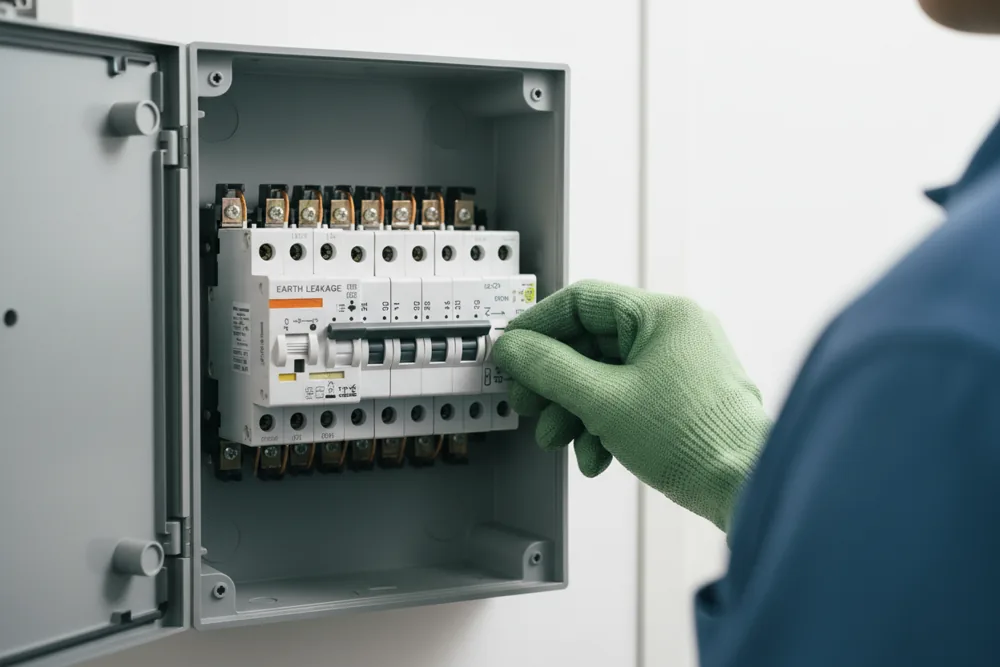 Blog
Blog
How RCCBs and MCBs differ
What each device protects, and why one of them is protecting a person rather than an appliance.
Read more Pricing
Electrician price list Singapore
Published market ranges for common jobs, with the source named against each figure.
Read moreTell us about your premises
Premises type, rough approved load if you know it, and what you need: fit-out, maintenance, or a fault. Add your access hours and any shutdown constraint, and we pass the job to an electrician who can take it. Ask them what the assessment costs before they visit.
Loading… if the form does not appear, contact us there instead.
If you see smoke or fire, call SCDF at 995 before anything else.
Island-wide
CBD offices, industrial estates, heartland shop units
Site survey
Commercial scopes are priced after someone has seen the switchboard
Your hours
Tell us your access hours and any shutdown constraint
Ready to hire an electrical contractor Singapore-wide, or just checking the licensing rule?
Ask the licensing questionCitations
Sources for every figure on this page
Every figure quoted above is a published third-party number, not an estimate of ours. Where sources disagree, both are shown. Collected and last reconciled 21 August 2026.
-
That electrical installation work is restricted to a Licensed Electrical Worker, and what to ask before letting anyone start.
EMA: engaging licensed electrical workers , checked 21 August 2026
-
The S$100, S$150, S$50 and S$21.40 statutory licence fees quoted on this page.
EMA: electrical and supply installation licences , checked 21 August 2026
-
That the licence register is public, free and searchable before any work begins.
ELISE: EMA’s public licence register , checked 21 August 2026
-
Parliamentary reply on the periodic inspection regime for electrical installations.
MTI written reply: Electrical Installations Regulations and inspection , April 2022
-
The Electricity (Electrical Installations) Regulations themselves.
Electricity (Electrical Installations) Regulations, Singapore Statutes Online , checked 21 August 2026
-
Electrician licence classes, and which class covers which scale of work.
EMA: electrician licence classes and conditions , checked 21 August 2026
Published prices move. If a figure here no longer matches the source, the source wins, tell us and it gets corrected rather than quietly left to rot.
Last updated