Offices and business premises · Singapore
Office Electrical Installation Singapore
Search office electrical installation Singapore and Google quietly tells you what this query is really about: three of the related searches it suggests are about the installation licence and the regulations, and the Electricity (Electrical Installations) Regulations themselves rank on page one. Not one electrical contractor Singapore page on that results list answers the compliance question. This one does, starting with the exemption that means most small office tenants need no licence at all.
- Licence question answered first
- Ask for the LEW name, check ELISE
- Published price ranges, sources named
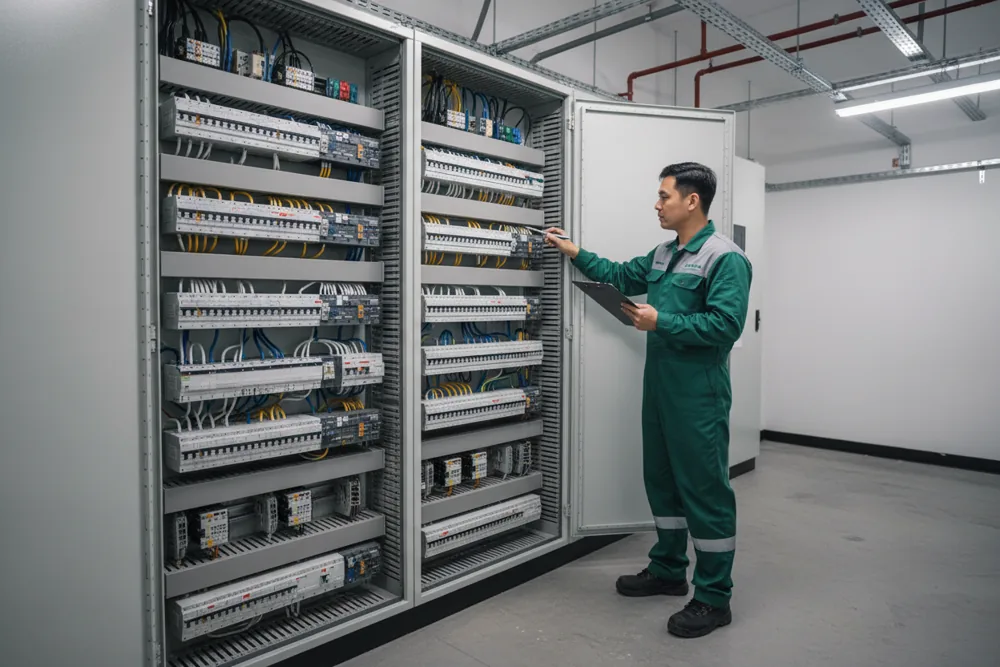
Does your office need an electrical installation licence?
The rules are specific, and knowing them takes the anxiety out of the question. Under EMA’s requirements, an electrical installation licence is required for three categories: installations used in hazardous trades; non-domestic installations with approved load exceeding 45kVA; and all supply installations for non-domestic purposes, regardless of load.
Installations used exclusively for domestic purposes are exempt. So an HDB flat or a condominium unit never needs one, but an office is non-domestic by definition, which is why this question belongs on this page and not on the residential ones.
Before you assume it applies to you, though, read the next section. For a large share of small office tenants, the answer is that somebody else’s licence already covers you.
En bloc electricity: the exemption most tenants have never been told about
Here is the fact that no page ranking for this search mentions, and it is worth real money.
Tenants in non-domestic buildings who buy their electricity en bloc through the landlord or the MCST are covered by the landlord’s or MCST’s licence, unless they specifically opted to keep a pre-existing separate licence. Holding a separate licence requires the tenant to have their own SP Services account for that unit.
Which turns the whole question into something you can answer from your monthly paperwork. If your electricity is billed to you by your landlord or the management as part of your service charge, you are almost certainly under their licence. If you hold your own SP Services account for the unit, the licensing question is live and the 45kVA threshold applies.
That is a five-minute check that determines whether a compliance workstream exists at all, and it is the first thing worth establishing before anyone quotes a fit-out.
45kVA
Approved load above which a non-domestic installation needs a licence: EMA
2–3 days
EMA approval time for a complete installation licence application
S$100 / 12mo
Electrical installation licence fee; S$50 for 3 months: EMA published fees
What 45kVA actually means
EMA’s own footnote translates it: 45kVA is equivalent to 63A three-phase at 400 volts. That is a genuinely useful number because it lets you place your unit rather than guess.
Usually well below: a conventional office of workstations, lighting, a pantry and a couple of split air-conditioning units. What pushes a unit over: a server room of any substance, a commercial kitchen, workshop or production equipment, EV charging, or centralised air-conditioning plant serving the unit.
Charging points are the addition most often underestimated. The same load arithmetic applies to a single home or office wallbox charger, so size the supply before choosing the unit.
The threshold matters twice over, because it also governs which class of Licensed Electrical Worker can take charge. A Licensed Electrician covers approved load not exceeding 45kVA at 1,000V and below; a Licensed Electrical Technician covers not exceeding 150kVA for design and 500kVA for operation at the same voltage level; a Licensed Electrical Engineer has no load limit, subject to licence conditions. On a home this distinction is academic. On an office fit-out it is a real appointment decision, see commercial and industrial electrical work.
The licence process, timescale and fees
If a licence does apply, the route is defined and short. It is worth knowing so that nobody can present it to you as a mysterious bureaucratic risk with a matching price tag.
One: the owner appoints a Licensed Electrical Worker and issues a Letter of Appointment. Two: the LEW inspects the installation. Three: the LEW submits the application through EMA’s ELISE portal.
EMA approves complete applications in 2 to 3 working days, and the LEW prints and delivers the licence within 7 days. Published fees: S$100 for a 12-month electrical installation licence or S$50 for 3 months; S$150 for a 12-month supply installation licence or S$50 for 3 months; S$21.40 including GST for a replacement.
One more thing worth knowing, because it prevents a specific confusion: EMA does not regulate what a Licensed Electrical Worker charges. The statutory fee and the professional fee are separate, and a quotation that blurs them is worth questioning.
Which code of practice applies?
Google asks this, and we are going to answer it in a way that stays true after this page is a year old.
We are not going to print a standard number and an edition year. Standards get revised, web pages do not, and a confidently stated stale reference is worse than none, which is a lesson this site has already learned the expensive way on other pages.
What is stable and checkable: the electrical installation regulations Singapore relies on are the the Electricity (Electrical Installations) Regulations, published in full on Singapore Statutes Online, and they rank on this very search, which tells you Google considers them part of the answer.
What is practically useful: ask the Licensed Electrical Worker taking charge which edition of the Singapore Standard for electrical installations they are working to, and have it named in the specification. That gets you a current answer from the person legally responsible for it, which is worth more than a number copied off a contractor’s website.
Send your floor plan and a photo of the board, and ask the electrician to start with the licence position
Get an office quotePublished Singapore office electrical prices
Published third-party figures
S$40–80 basic call-out charge; S$70–150 per unit lighting installation; from S$80 power socket installation (sgoffices.com office electrician price list, 2025).
S$120–220 new power point on surface trunking; S$80–180 per light point install or replace (fixmove.sg 2026, general Singapore ranges).
S$320–800 distribution board repair or replacement; from S$380 6-way, S$580 12-way, S$780 18-way (homejourney.sg, fixmove.sg).
S$100 / S$150 statutory installation and supply installation licence fees, 12 months (EMA).
Why office work sits higher than domestic
Access. Raised floors, false ceilings, occupied desks and lift bookings all add time that a bare per-point rate does not contain.
Out-of-hours working, which building management frequently requires rather than merely permits.
Containment. Commercial routes are engineered: tray, trunking, floor boxes, not a length of surface conduit.
Testing and documentation. Test reports, board schedules and as-builts are part of the deliverable, not an extra.
These are published third-party ranges collected 18 August 2026, not our rates, full list on the market price ranges page.
The landlord and MCST layer
In a managed building this is the workstream that decides your programme, and no contractor page on this search mentions it.
Expect to submit contractor details and insurance documentation, agree permitted working hours, and comply with rules on lift protection, noise, hot works and waste removal. None of that is unusual; all of it takes calendar time.
And be clear about what is not yours. The riser, the meter position and the supply capacity into the unit belong to the building. If the fit-out needs more supply than the unit currently has, that is a conversation with building management before it is a conversation with an electrician, and it is the most common reason a small office fit-out slips. Establish it in week one, not in week four.
It obviously doesn't like just having all that load switched on in one go.
Reinstatement: the cost nobody prices at the start
Most commercial leases require the tenant to reinstate the unit at the end of the term, and almost no fit-out quotation mentions it.
Reinstatement can include removing the containment, the additional circuits and the sub-board you paid to install, so the fit-out you specify today has a removal cost attached to it that lands years later and is entirely predictable now.
Two practical consequences. Read the reinstatement clause before you design the fit-out, because a specification that is straightforward to remove is straightforward to reinstate. And keep the handover documentation, because knowing precisely what was added is what stops the reinstatement scope being negotiated from memory against a landlord with better records than you.
Board capacity first, layout second
Spare ways, sub-boards where the distance or the load justifies them, and a load assessment against your actual headcount and equipment. Then floor boxes, desk power, pantry circuits, aircon isolators and any dedicated circuits.
If the existing board has no room, that is the job before the job, see distribution board upgrades and adding sockets and power points.
Run it while the route is open
Structured cabling to desks and meeting rooms shares the containment with power, so an office fit out that specifies data points at the same time as power points is materially less disruptive than adding them later.
Comms racks and UPS equipment want dedicated circuits, clear labelling and an isolation plan, because they are precisely the things nobody wants switched off by accident during a later visit.
Circuits, controls and the ceiling
Lighting layout, circuit grouping and controls, occupancy and daylight sensing where it earns its place, plus emergency lighting and exit signage as a separate consideration governed by the building’s requirements.
Most office lighting sits in or under a false ceiling, which makes it a ceiling job as much as an electrical one: see light and ceiling fan installation.
Protection: is RCCB mandatory in Singapore?
Google asks this on this search too, and the honest answer distinguishes two things.
The mandate people are thinking of is domestic. Residual current circuit breaker installation has been required since 1985 for new domestic premises and on rewiring, and since 1 July 2023 for all HDB flats and private residences. Those rules are about homes.
In commercial premises, protection is a design question determined by the installation, the circuits and the standard being worked to, which is another reason to have the standard named in your specification rather than assumed. What is constant is that the Licensed Electrical Worker taking charge is responsible for the protection arrangement, and that it should be evidenced by test results at handover. What each device does: RCCBs, ELCBs and MCBs compared.
Working around a business that has to keep running
The electrical quote is rarely the biggest number in this decision. The downtime is.
Out-of-hours and weekend working costs more per hour and is frequently required by building management regardless. Phased handover, energising and testing circuits in stages so part of the floor keeps working, takes longer in total but avoids a full shutdown. A single shutdown is the fastest and the most disruptive.
The calculation worth doing before choosing: what an hour of your own downtime actually costs. For most offices it dwarfs the difference between the three approaches, and it usually argues for paying the out-of-hours premium rather than negotiating it away. If something fails unexpectedly mid-fit-out, an emergency electrician is the fallback.
Testing, and the documents to demand at handover
Ask for these before the work starts. Asking afterwards is how you find out what was not included.
Test results: insulation resistance, earth continuity, loop impedance and RCCB operation as applicable to the installation. A board schedule with every way labelled to a circuit and a location. An as-built or updated single-line diagram where the distribution changed.
The name and licence number of the Licensed Electrical Worker responsible, which you can verify in about a minute, using the ELISE lookup guide. And the installation licence itself where one applies.
This is the paperwork that makes your next fit-out, your next fault and your eventual reinstatement a matter of reading rather than of excavation.
Home offices, shophouses and the edge cases
The domestic exemption has a boundary, and it is worth knowing where it sits before assuming which side you are on.
A home office in a flat or a house that remains a residence is still a domestic installation, the laptop on the desk does not change the character of the premises, and HDB electrical works covers the rules that do apply.
Shophouses, mixed-use units, retail, clinics and food and beverage premises are where it gets genuinely case-specific: trade type, how the unit is metered and what equipment is installed all bear on it, and hazardous-trade use brings a licence requirement regardless of load. Those are questions to put to the Licensed Electrical Worker before a fit-out is designed, not after.
What to send us for a quote
Five things, and a scoped office electrical installation Singapore price becomes possible without a site visit for anything but the survey.
A floor plan with the intended layout. A photo of the existing distribution board with the labels readable. Headcount and equipment: desks, meeting rooms, pantry appliances, server or comms equipment, air-conditioning.
How electricity is billed to the unit: through the landlord or the MCST, or your own SP Services account. And the relevant lease terms: permitted works, working hours and the reinstatement clause. That last one changes the design, not just the paperwork.
What we do not claim
We make no claims about project scale, industrial credentials, client lists or maintenance contracts. This site is a live build and no operating contractor has been signed to it yet, so any such claim would be invented.
We do not publish a standards number or edition. See the code-of-practice section for why, and for the better question to ask.
Every price here is a published third-party figure with its source named, collected 18 August 2026, except the statutory fees, which are EMA’s. None of them is our rate. Landlord and MCST requirements are described generically because they vary by building, yours are whatever your building says they are.
Office electrical installation FAQs
Does my office need its own electrical installation licence?
Often not, and this is the fact that saves small office tenants the most trouble. Under EMA’s rules a licence is required for installations used in hazardous trades, for non-domestic installations with approved load exceeding 45kVA, and for supply installations for non-domestic purposes regardless of load. But tenants in non-domestic buildings who buy their electricity en bloc through the landlord or the MCST are covered by the landlord’s or MCST’s licence, unless they opted to keep a pre-existing separate licence. A separate licence requires the tenant to have their own SP Services account for that unit. So the practical first question is not "what licence do I need" but "how is electricity billed to my unit". Installations used exclusively for domestic purposes are exempt entirely.
What does 45kVA mean in practice?
EMA’s own footnote puts it plainly: 45kVA is equivalent to 63A three-phase at 400 volts. That is a meaningful threshold for a fit-out because it decides both whether an installation licence is required and which class of Licensed Electrical Worker can take charge: a Licensed Electrician covers approved load not exceeding 45kVA at 1,000V and below, a Licensed Electrical Technician covers up to 150kVA for design and 500kVA for operation, and a Licensed Electrical Engineer has no load limit subject to licence conditions. A modest office of desks, lighting and a pantry usually sits well below the threshold. Server rooms, commercial kitchens, workshop equipment and substantial air-conditioning are what push a unit over it.
How long does an electrical installation licence take, and what does it cost?
The route is defined. The owner appoints a Licensed Electrical Worker and issues a Letter of Appointment; the LEW inspects the installation and submits the application through EMA’s ELISE portal. EMA approves complete applications in 2 to 3 working days, and the LEW prints and delivers the licence within 7 days. Published fees: an electrical installation licence is S$100 for 12 months or S$50 for 3 months; a supply installation licence is S$150 for 12 months or S$50 for 3 months; a replacement licence is S$21.40 including GST. Note also that EMA does not regulate what a LEW charges for their own work, the statutory fees and the professional fees are separate things.
Which is the latest code of practice for electrical installation in Singapore?
Google asks this, and we are deliberately not going to print a standard number and an edition year on a web page, because standards are revised and a stale number is worse than no number. Two things are more useful. First, installations are governed by the Electricity (Electrical Installations) Regulations, which are published in full on Singapore Statutes Online and are worth linking rather than paraphrasing. Second, and practically: ask the Licensed Electrical Worker taking charge of your job which edition of the Singapore Standard for electrical installations they are working to, and have it named in the specification. That question gets you a current answer from the person legally responsible for it, which is what you actually need.
How much does office electrical work cost in Singapore?
Published third-party figures, collected 18 August 2026. sgoffices.com’s office electrician price list puts a basic call-out charge at S$40–80, lighting installation at S$70–150 per unit and power socket installation from S$80. For comparison, general Singapore ranges put a new power point on surface trunking at S$120–220 and a light point install or replace at S$80–180, while distribution board work runs S$320–800 or from S$380 for a 6-way board. None of those is our rate. Office work tends to sit at the upper end of general ranges for reasons covered on this page: access, containment, out-of-hours working and the documentation a commercial handover requires.
Does the landlord or MCST have to approve the works?
In a managed building, almost always. Expect to submit contractor details and insurance, agree permitted working hours, and comply with rules on lift protection, hot works, noise and waste. It is also worth understanding what is not yours: the riser, the meter position and the supply capacity into the unit belong to the building. If your fit-out needs more supply than the unit currently has, that is a conversation with building management before it is a conversation with an electrician, and it is the single most common cause of programme slippage on small office fit-outs.
Who pays for reinstatement at the end of the lease?
You do, in most commercial leases, and almost no fit-out quotation mentions it. Reinstatement typically means returning the unit to its original condition: which can include removing the containment, the additional circuits and the sub-board you paid to install. Two things follow. Read the reinstatement clause before you design the fit-out, because a specification that is easy to remove is less costly to reinstate. And keep the handover documentation, because knowing exactly what was added is what stops a reinstatement scope being negotiated from memory at the end of a lease.
Can the work be done outside business hours?
Usually, and for an occupied office it is often the only sensible option. Building management commonly restricts noisy or disruptive work to evenings and weekends anyway. The trade-offs are real: out-of-hours labour costs more, and a phased handover, circuits energised and tested in stages so parts of the floor stay working, takes longer overall than a single shutdown. The calculation worth doing before you decide is what an hour of your own downtime costs, because for most offices it dwarfs the difference in the electrical quote.
What documents should we get at handover?
More than an invoice, and it is much easier to ask for these before the work starts than after. Test results: insulation resistance, earth continuity and, where applicable, RCCB operation. A board schedule with every way labelled to a circuit and a location. An as-built or updated single-line diagram if the distribution changed. Confirmation of the Licensed Electrical Worker responsible, with their licence number, checkable on ELISE. And where an installation licence applies, the licence itself. This is the paperwork that makes the next fit-out, the next fault and the eventual reinstatement straightforward instead of archaeological.
Related guides
Service
Commercial electrical work
Licences, LEW classes and the regulatory picture in full.
Read more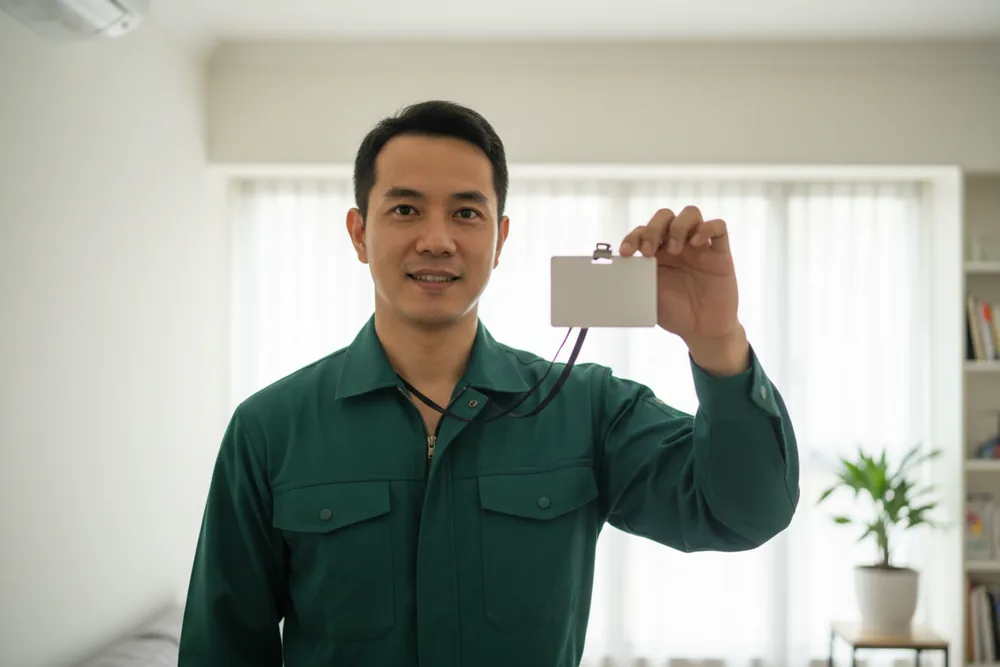 Service
Check a licence on ELISE
Verify the individual taking charge, in about a minute.
Read more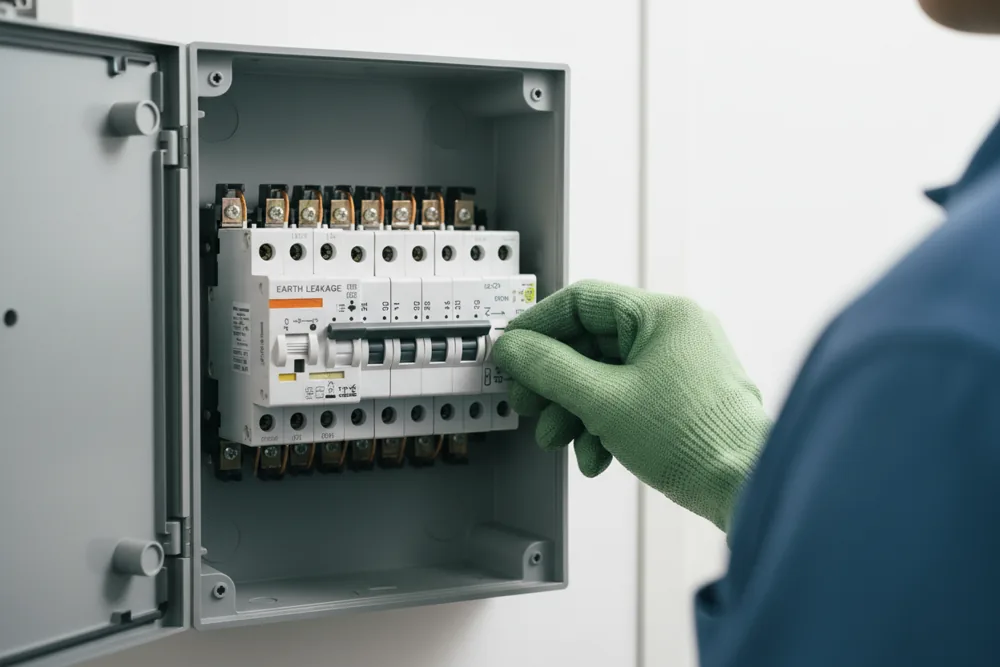 Service
Boards and circuit breakers
When the board is the constraint on the fit-out.
Read more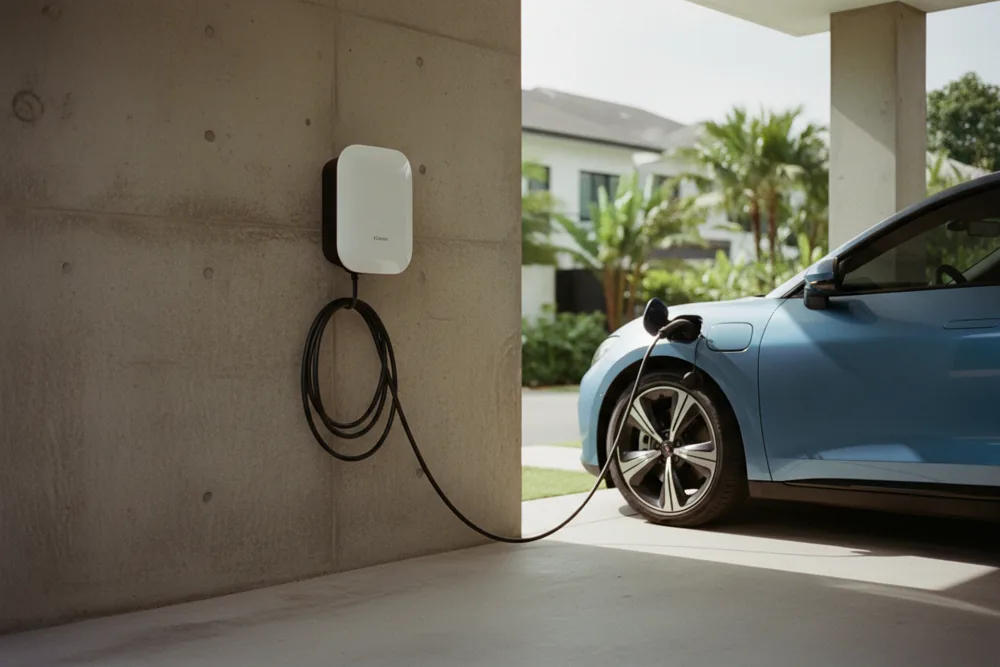 Service
EV charger installation
The load that most often pushes a unit past its threshold.
Read moreTell us about the unit
Send the floor plan, a photo of the distribution board with labels readable, your headcount and equipment list, how electricity is billed to the unit, and the permitted-works and reinstatement clauses from the lease. We pass it to an electrician who can take the job. Ask them to start with the licence position, because it decides whether there is a compliance workstream at all.
Loading… if the form does not appear, contact us there instead.
If you see smoke or fire, call SCDF at 995 before anything else.
Island-wide
Offices, retail units, shophouses and business premises
Licence first
Settle the compliance position before the programme is set
Check ELISE
Ask for the LEW name and licence number, then verify it
Not sure whether the licence applies to you? It usually takes one question to find out
Ask about your unitCitations
Sources for every figure on this page
Every figure quoted above is a published third-party number, not an estimate of ours. Where sources disagree, both are shown. Collected and last reconciled 21 August 2026.
-
The Electricity (Electrical Installations) Regulations themselves.
Electricity (Electrical Installations) Regulations, Singapore Statutes Online , checked 21 August 2026
-
Statutory installation and supply licence fees, and which premises need one.
EMA: electrical and supply installation licences , checked 21 August 2026
-
That electrical installation work is restricted to a Licensed Electrical Worker, and what to ask before letting anyone start.
EMA: engaging licensed electrical workers , checked 21 August 2026
-
That the licence register is public, free and searchable before any work begins.
ELISE: EMA’s public licence register , checked 21 August 2026
Published prices move. If a figure here no longer matches the source, the source wins, tell us and it gets corrected rather than quietly left to rot.
Last updated