HDB · Guide · Updated 18 August 2026
HDB Electrical Loading: What 30A to 40A Actually Changes
The hdb electrical loading upgrade, explained for people planning a renovation: how to check hdb electrical loading for your own block, what 30A and 40A each permit, and why the upgrade programme still has four years to run before the last blocks are done.
The short version
The one-minute version: check your block on HDB’s check electrical load of HDB block tool, then look at the rating on your own main switch, 30A or 40A. Higher electrical loading HDB status is what removes the permit requirement for new 15A air-conditioner points. If your block is still on 30A, HDB is upgrading about 1,500 older blocks to 40A by 2030, and your notice letter, not any website, is the authority on when.
HDB electrical loading is the approved supply rating of your flat: 30A on older blocks, 40A on newer and upgraded ones. It decides whether a new 15A air-conditioner point needs an HDB permit, and it is printed on your own main switch. HDB is upgrading roughly 1,500 older blocks to 40A by 2030, block by block, and the notice letter for your block is the authority on when.
How to check your block in a minute
Two checks, and you should do both because they answer slightly different questions.
One: HDB’s own lookup. The Check Electrical Load of HDB Block service lets you enter your block and read its status directly from the source. It ranks first on Google for this question, which is a fair indication that it is the definitive answer.
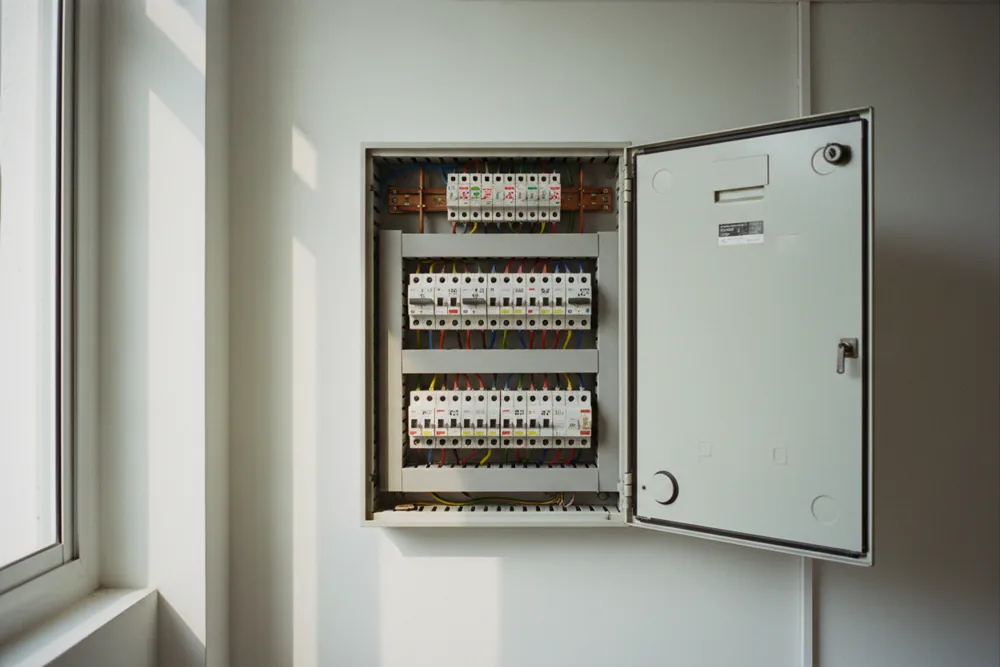
Two: your main switch. Open the distribution board, usually near the front door, and read the rating printed on the main switch. It will say 30A or 40A.
Why the two can disagree
Because they are not measuring the same thing. The tool describes the block’s incoming supply. The main switch describes what your unit is currently rated at. A block can have been upgraded while an individual flat still carries older equipment, and a main switch can carry a rating the supply behind it does not support.
For anything where money depends on the answer: a renovation, an induction hob, an air-conditioning quote, have a Licensed Electrical Worker, the electrician Singapore renovations actually depend on, confirm it rather than relying on your own reading of a label.
What ELUP HDB actually means
The Electrical Load Upgrading Programme raises the unit electrical power supply in older HDB blocks from 30 amps to 40 amps.
The scope is stated in a Ministry of National Development written answer dated 7 May 2026: HDB will upgrade the unit electrical power supply from 30 amps to 40 amps for about 1,500 older HDB blocks by 2030. See MND’s written answer on upgrading electrical power supply for HDB blocks. It targets blocks from the 1970s, 1980s and early 1990s still on the older rating.
What 30A versus 40A means in appliances, not amps
Rough arithmetic on a single-phase supply puts 30A at around 6.9kW and 40A at around 9.2kW. Treat those as approximate conversions rather than official figures: they are the multiplication, not a published specification.
What the extra headroom buys is the modern combination running together: air-conditioning, an induction hob, a built-in oven, a water heater and a kettle, overlapping at dinner time. A flat on 30A is not incapable of any of those individually.
It is about simultaneous use
This is the part that surprises people. Nobody runs everything at once, and installations are designed on the assumption that they will not, which is why a 30A flat can own high-power appliances quite happily and still trip on the one evening when the aircon, the oven and the kettle coincide. If your flat trips predictably at moments of heavy overlap and nothing is warm afterwards, that is a loading pattern rather than a fault, and the power trip troubleshooting guide covers how to tell the difference.
The 15A permit rule
This is the most consequential rule on the page, and HDB states it plainly: flats without higher electrical loading require an HDB permit to install new 15A power points for air-conditioners or other higher-capacity appliances, see HDB renovation guidelines for electrical works.
So the permit question is decided by your loading status, which is why checking it comes before designing anything. It is also why the aircon isolator and its power point starts with the same question.
The 1994 cutoff and the Main Upgrading Programme
HDB’s guidance ties higher loading to blocks completed on or after 1 January 1994, or blocks that have been through the Main Upgrading Programme, where the incoming electrical supply was also upgraded. If your block falls into either category, you generally have a 40a supply and are in the higher-loading group.
Do not infer it from the age of your flat alone, though, consumer guides circulate conflicting rules of thumb about which era has which rating. Check the tool.